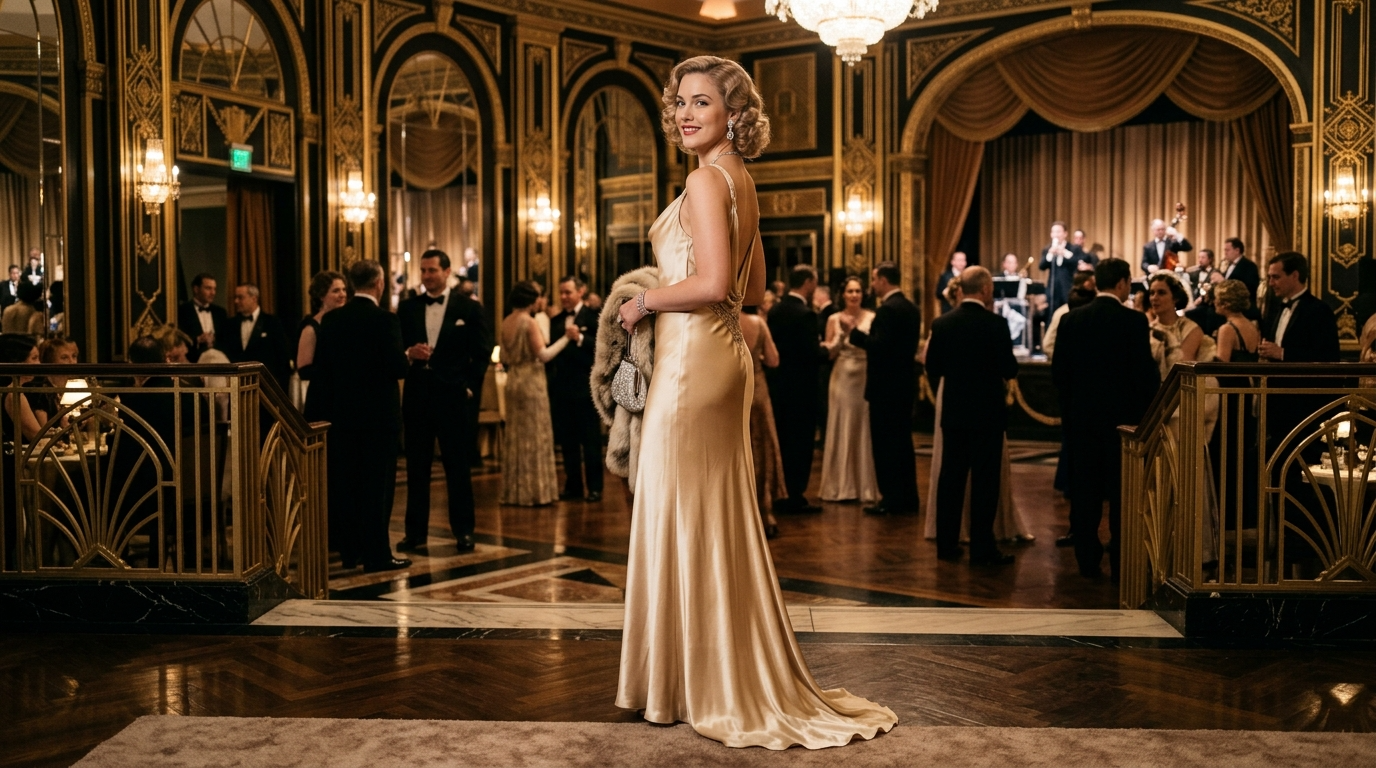
Explore the elegance of the 1930s evening gown with vintage fashion inspiration, iconic silhouettes, luxurious fabrics, sewing tips, and styling ideas for timeless old Hollywood glamour in 2026.
Introduction
Few fashion eras feel as effortlessly elegant as the 1930s. Flowing satin gowns, dramatic bias cuts, and glamorous old Hollywood silhouettes created some of the most iconic evening dresses in fashion history. Even today, the 1930s evening gown continues inspiring designers, vintage fashion lovers, sewists, and red carpet stylists around the world.
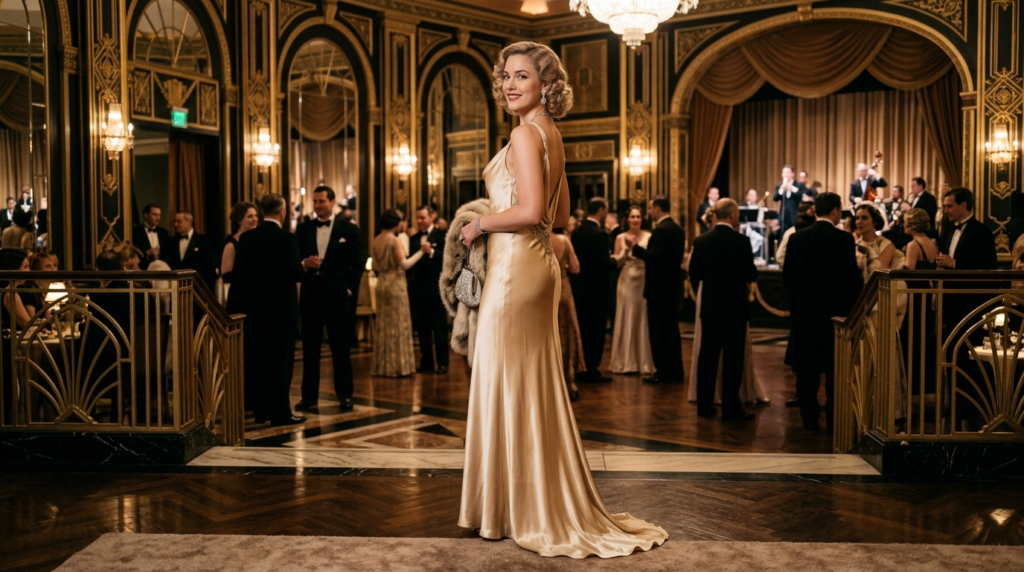
What made 1930s evening gowns so unforgettable? Simplicity mixed with sophistication. Instead of heavy embellishments and oversized shapes, gowns from this era focused on fluid movement, luxurious fabrics, and flattering silhouettes that hugged the body gracefully. The result was pure elegance!
From silver screen legends to modern vintage-inspired weddings, the influence of 1930s evening fashion remains stronger than ever. In this guide, we’ll explore the history, styles, fabrics, sewing techniques, and modern interpretations of the timeless 1930s evening gown.
What Defines a 1930s Evening Gown?
The 1930s evening gown is often considered one of the most elegant and sophisticated styles in fashion history. Unlike the heavily embellished flapper dresses of the 1920s, 1930s evening fashion embraced fluid silhouettes, graceful draping, and understated luxury. The result was a softer, more feminine look that emphasized natural curves and timeless glamour.
Even today, the influence of the 1930s evening gown can be seen everywhere — from red carpet fashion and bridal collections to modern couture runways and vintage-inspired evening wear. The era introduced a refined style that balanced simplicity with sophistication, creating gowns that still feel incredibly wearable nearly a century later.
One of the defining characteristics of 1930s fashion was its focus on elegance through movement rather than excessive decoration. Designers during this era relied on fabric drape, silhouette, and tailoring to create visual impact. Instead of bulky layers or dramatic embellishments, gowns were designed to skim the body gracefully and move beautifully as women walked or danced.
This approach gave birth to the iconic bias cut gown, a revolutionary style technique that became synonymous with 1930s evening wear. By cutting fabric diagonally across the grain, designers created dresses that naturally hugged the body while maintaining soft, flowing movement. Bias-cut gowns became one of the most recognizable symbols of old Hollywood glamour and continue inspiring modern designers today.
The rise of Hollywood played a massive role in shaping the popularity of the 1930s evening dress. During the Great Depression, movie audiences looked to glamorous film stars for escapism and inspiration. Legendary actresses appeared on screen wearing luxurious satin gowns, dramatic backless dresses, and elegant floor-length silhouettes that captured the imagination of women everywhere.
As a result, Hollywood glamour became deeply connected to 1930s evening fashion. Costume designers created stunning dresses featuring sleek lines, shimmering fabrics, and sophisticated draping techniques that made actresses appear effortlessly elegant under studio lighting. These cinematic styles quickly influenced mainstream formal wear trends around the world.
Several key design elements define the classic 1930s evening gown aesthetic.
Bias-Cut Gowns
The bias cut became one of the most revolutionary fashion techniques of the decade. Unlike traditional garment construction, bias-cut dresses allowed fabric to stretch and contour naturally around the body. This created fluid, body-skimming silhouettes that looked graceful and feminine without feeling restrictive.
Bias-cut satin gowns became especially popular because satin enhanced the natural drape and shine of the fabric. These dresses often appeared simple at first glance, yet their elegance came from precise tailoring and luxurious movement.
Floor-Length Dresses
Unlike shorter flapper styles from the previous decade, most 1930s formal dresses featured long, flowing skirts that extended to the floor. The elongated silhouette created a refined and sophisticated appearance that became closely associated with luxury evening wear.
Floor-length evening gowns added drama while still maintaining softness and femininity. The movement of the fabric was considered just as important as the overall design itself.
Open Back Designs
Backless evening dresses became one of the boldest fashion statements of the era. While the front of many gowns remained relatively modest, dramatic open backs introduced sensuality in a subtle and elegant way.
Hollywood actresses frequently wore backless satin gowns in films and publicity photographs, helping popularize the trend among fashionable women. Even today, modern vintage-inspired gowns often incorporate open-back details inspired by 1930s evening fashion.
Satin Fabrics
Luxurious fabrics were essential to achieving the signature look of a 1930s evening gown. Satin, silk charmeuse, velvet, and chiffon were among the most popular materials used during the decade.
Satin evening gowns became particularly iconic because the fabric reflected light beautifully, especially in black-and-white films. The soft sheen of satin enhanced the elegant draping and fluid silhouettes that defined the era.
These fabrics were chosen not only for their beauty but also for the way they moved with the body. Designers wanted gowns to appear effortless, graceful, and sophisticated from every angle.
Draped Details
Draping played a major role in 1930s couture fashion. Instead of relying heavily on embroidery or sequins, designers used strategic folds and gathers to create texture and visual interest.
Common draped details included:
- Soft cowl necklines
- Gathered hips
- Flowing sleeves
- Draped bodices
- Cascading skirt panels
These techniques added dimension while preserving the clean, elegant lines associated with vintage evening gowns from the period.
Another important aspect of understanding the 1930s evening gown is recognizing how different it was from 1920s fashion. The 1920s focused heavily on youthful flapper silhouettes with dropped waists, fringe, and loose-fitting shapes. Dresses from that era emphasized freedom, movement, and rebellion against traditional fashion norms.
By contrast, 1930s evening dresses embraced a far more mature and sophisticated aesthetic. Waistlines returned to their natural position, silhouettes became longer and leaner, and fabrics draped closely against the body. The dramatic geometric embellishments of Art Deco fashion remained influential, but overall styling became softer, more refined, and more romantic.
This transition reflected changing social attitudes and economic realities during the Great Depression. Women still desired glamour, but fashion became less flashy and more elegant. Designers focused on creating luxurious looks through expert tailoring and fabric manipulation rather than excessive ornamentation.
The lasting appeal of the 1930s evening gown comes from its timeless balance of simplicity and sophistication. Modern designers continue referencing vintage bias-cut dresses, old Hollywood gowns, and satin evening silhouettes because they flatter so many body types while maintaining effortless elegance.
Today’s red carpet fashion frequently echoes 1930s glamour through:
- Minimalist satin gowns
- Open-back silhouettes
- Fluid draping
- Figure-skimming cuts
- Vintage-inspired styling
Bridal designers also draw heavily from 1930s evening wear when creating romantic wedding dresses with soft movement and understated luxury.
In an era where trends constantly change, the 1930s evening gown remains timeless because it celebrates elegance without excess. The graceful silhouettes, luxurious fabrics, and refined details continue proving that true glamour never goes out of style.
The History Behind 1930s Evening Gowns
The history of the 1930s evening gown is deeply connected to one of the most challenging periods of the twentieth century. While the decade was marked by economic hardship during the Great Depression, it also became one of the most glamorous eras in fashion history. Women turned to elegance, cinema, and sophisticated evening wear as a form of escape, and the result was a timeless style that still influences modern fashion today.
Unlike the bold rebellion of 1920s flapper fashion, 1930s evening dresses introduced a softer and more refined aesthetic. Designers focused on fluid silhouettes, luxurious fabrics, and graceful tailoring that celebrated femininity in a completely new way. This transition helped define the iconic old Hollywood glamour associated with the decade.
Fashion Changes During the Great Depression
The Great Depression began after the stock market crash of 1929 and dramatically affected economies around the world throughout the 1930s. Despite financial struggles, fashion did not disappear. Instead, it evolved into something more elegant, practical, and sophisticated.
Women could no longer afford excessive embellishments or heavily decorated wardrobes in the same way they had during the roaring twenties. As a result, fashion designers shifted toward cleaner lines, better tailoring, and high-quality fabrics that created luxury through simplicity rather than extravagance.
This economic shift influenced evening gown design significantly. Rather than relying on layers of fringe, beads, and flashy ornamentation, 1930s evening gowns emphasized silhouette and movement. The focus became creating dresses that looked glamorous while using fabric more intelligently and efficiently.
Interestingly, even during difficult financial times, formal fashion remained important. Women still attended parties, dinners, theater events, and social gatherings, especially among wealthier social circles. Elegant evening wear became a symbol of sophistication and optimism during uncertain times.
Rise of Hollywood-Inspired Evening Fashion
One of the biggest influences on 1930s evening fashion was Hollywood cinema. During the Great Depression, movies offered audiences a temporary escape from everyday struggles. Film studios created luxurious fantasy worlds filled with glamour, romance, and elegant fashion.
As movies became increasingly popular, audiences were mesmerized by actresses wearing flowing satin gowns, dramatic bias-cut dresses, and sophisticated floor-length evening wear. Hollywood quickly became the center of fashion inspiration for women across America and beyond.
Black-and-white films played a particularly important role in shaping fashion trends. Designers used fabrics like satin, silk charmeuse, and velvet because they photographed beautifully under studio lighting. Shimmering textures and elegant draping appeared stunning on screen, making these materials highly desirable for formal wear.
This connection between cinema and fashion helped establish the image of the classic 1930s evening gown: sleek, glamorous, feminine, and effortlessly elegant.
Influence of Film Stars and Costume Designers
Film stars of the 1930s became global fashion icons. Women closely followed the wardrobes of actresses and attempted to recreate their glamorous evening looks for parties, galas, and formal events.
Actresses such as Jean Harlow, Greta Garbo, Marlene Dietrich, and Joan Crawford became famous not only for their films but also for their stunning evening gowns and sophisticated personal style.
Many of these unforgettable looks were created by legendary Hollywood costume designers who transformed film fashion into cultural trends. Designers carefully crafted gowns that enhanced movement, reflected light beautifully, and highlighted the actresses’ silhouettes on screen.
Bias-cut satin gowns became especially popular because they moved gracefully with the body and created an almost liquid appearance under cinematic lighting. Open backs, draped necklines, and body-skimming silhouettes quickly became signature features of old Hollywood evening fashion.
Hollywood costume design essentially blurred the line between cinema and couture. Women everywhere wanted to capture the elegance and sophistication they saw on screen.
Popular Fashion Icons of the Era
Several fashion icons helped define the visual identity of 1930s evening wear. Their influence extended far beyond film and shaped mainstream fashion trends around the world.
Jean Harlow became famous for her glamorous satin gowns that emphasized sleek silhouettes and luxurious fabrics. Her style embodied classic Hollywood sophistication and inspired countless women to embrace elegant evening fashion.
Greta Garbo represented understated luxury and refined femininity. Her evening gowns often featured soft draping, dramatic tailoring, and minimalist elegance that still feels modern today.
Marlene Dietrich helped popularize bold and daring evening styles, including tuxedo-inspired tailoring and glamorous backless gowns. Her sophisticated image challenged traditional fashion expectations and introduced a more confident, fashion-forward aesthetic.
Meanwhile, designers such as Madeleine Vionnet revolutionized fashion with the development of bias-cut techniques. Her innovative approach transformed evening gowns into fluid, body-enhancing works of art that defined 1930s couture fashion.
These fashion icons helped establish the enduring appeal of vintage Hollywood glamour.
Evolution From Flapper Fashion to Elegant Silhouettes
The transition from 1920s fashion to 1930s evening gowns represented a major shift in women’s style. During the twenties, flapper dresses focused on youthful energy, loose silhouettes, dropped waists, fringe, and fast movement.
By the early 1930s, fashion moved toward a more mature and sophisticated look. Waistlines returned to their natural position, dresses became longer, and silhouettes emphasized the female form more gracefully.
Instead of straight, boxy shapes, 1930s evening dresses featured:
- Bias-cut tailoring
- Slim waistlines
- Soft draping
- Flowing skirts
- Open backs
- Feminine curves
This new approach created a more romantic and elegant appearance while still maintaining modern simplicity.
The evolution also reflected changing social attitudes. Women of the 1930s sought elegance and refinement rather than the rebellious freedom associated with the flapper era. Evening fashion became more polished, graceful, and luxurious without appearing overly extravagant.
Impact of Luxury Fabrics and Tailoring
Luxury fabrics played a central role in defining the beauty of the 1930s evening gown. Designers relied heavily on the natural movement and drape of materials rather than excessive embellishments.
Popular fabrics included:
- Satin
- Silk charmeuse
- Velvet
- Chiffon
- Lace
- Metallic textiles
Satin evening gowns became especially iconic because the fabric created fluid movement and reflected light beautifully. In Hollywood films, satin appeared almost luminous on screen, adding to the glamorous fantasy audiences admired.
Expert tailoring also became more important than ever. Designers used careful draping techniques and bias-cut construction to create dresses that fit closely while still allowing graceful movement.
Unlike heavily structured gowns from later decades, 1930s evening dresses often appeared effortless and natural. This balance between precision tailoring and fluid softness became one of the defining characteristics of vintage formal fashion.
The influence of these techniques can still be seen today in modern red carpet gowns, bridal fashion, and minimalist evening wear collections inspired by old Hollywood glamour.
The history of the 1930s evening gown is ultimately a story of elegance emerging during difficult times. Through luxurious fabrics, expert tailoring, and cinematic influence, the decade created one of the most timeless fashion aesthetics ever seen — one that continues inspiring designers and fashion lovers nearly a century later.
Most Popular 1930s Evening Gown Styles
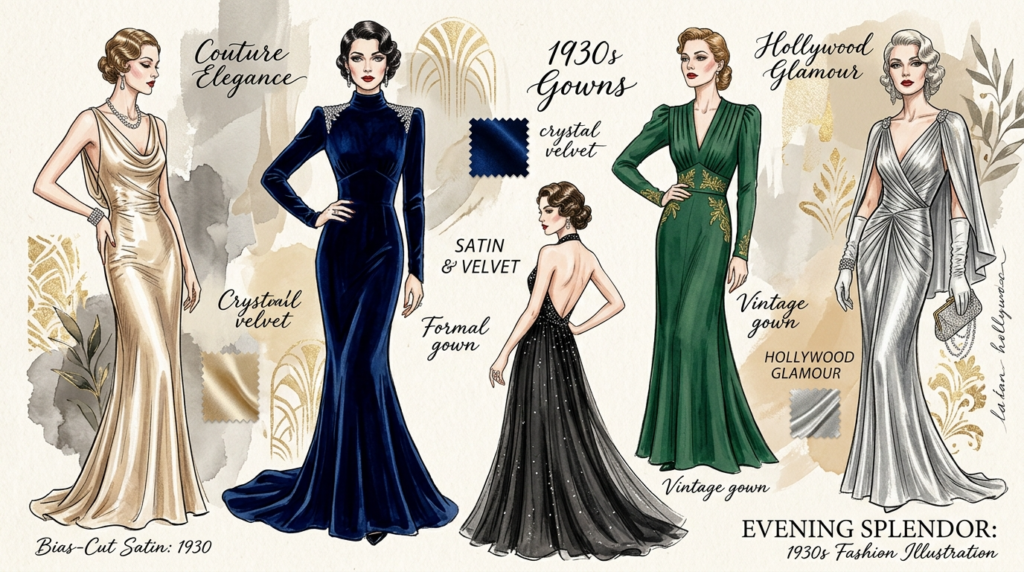
The 1930s introduced some of the most elegant evening gown styles ever created. Unlike the heavily embellished fashions of previous decades, 1930s evening dresses focused on graceful movement, luxurious fabrics, and sophisticated silhouettes. Designers used draping, tailoring, and innovative cutting techniques to create gowns that looked both glamorous and effortless.
Many of these vintage styles still inspire modern formal fashion today. From old Hollywood red carpets to contemporary bridal couture, the influence of the 1930s evening gown remains timeless and unmistakable.
Here are some of the most iconic 1930s evening gown styles that continue defining vintage glamour nearly a century later.
Bias-Cut Satin Gowns
The bias-cut satin gown became the signature silhouette of 1930s evening fashion. Few styles represent old Hollywood glamour more perfectly than a sleek satin dress flowing elegantly around the body.
The term “bias cut” refers to cutting fabric diagonally across the grain rather than straight. This revolutionary technique allowed fabric to stretch naturally and drape softly against the body without requiring heavy structure or stiff tailoring.
Designers like Madeleine Vionnet helped popularize the bias-cut gown during the 1930s, transforming evening wear into something fluid, feminine, and incredibly sophisticated.
Bias-cut satin gowns became famous because they:
- Skimmed the body gracefully
- Created elegant movement
- Enhanced natural curves
- Reflected light beautifully
- Looked luxurious without excessive embellishment
The fluid draping effect made these gowns especially stunning in Hollywood films. Under studio lighting, satin appeared almost liquid-like as actresses moved across the screen.
Popular colors for 1930s satin evening gowns included:
- Ivory
- Champagne
- Emerald green
- Deep burgundy
- Midnight blue
- Silver
- Classic black
Glossy satin finishes remained the most iconic, although matte silk charmeuse and softly draped fabrics also gained popularity for more understated elegance.
Today, modern designers frequently recreate vintage bias-cut gowns for red carpet events, weddings, and minimalist luxury fashion collections.
Backless Evening Dresses
Backless evening dresses became one of the boldest and most glamorous trends of the 1930s. While daytime fashion remained relatively conservative, evening wear allowed designers to experiment with sensuality in elegant and sophisticated ways.
The open-back gown quickly became a defining feature of old Hollywood evening fashion. Many dresses appeared modest from the front but revealed dramatic low backs that created visual impact and timeless glamour.
Hollywood actresses such as Jean Harlow and Marlene Dietrich helped popularize backless satin gowns through films, publicity photos, and glamorous public appearances.
These dresses often featured:
- Draped cowl backs
- Deep V-back silhouettes
- Thin shoulder straps
- Flowing floor-length skirts
- Bias-cut satin construction
The combination of soft fabric and open-back styling created a look that felt daring yet refined.
Modern fashion continues embracing the elegance of 1930s backless evening dresses. Today’s designers frequently reinterpret these vintage silhouettes with contemporary details such as:
- Minimalist satin finishes
- High slits
- Modern tailoring
- Sheer illusion panels
- Sleek silhouettes
For modern styling, backless gowns pair beautifully with:
- Statement earrings
- Elegant updos
- Minimal jewelry
- Satin heels
- Vintage-inspired makeup
This timeless design remains one of the most sophisticated formal dress styles ever created.
Long Sleeve Evening Gowns
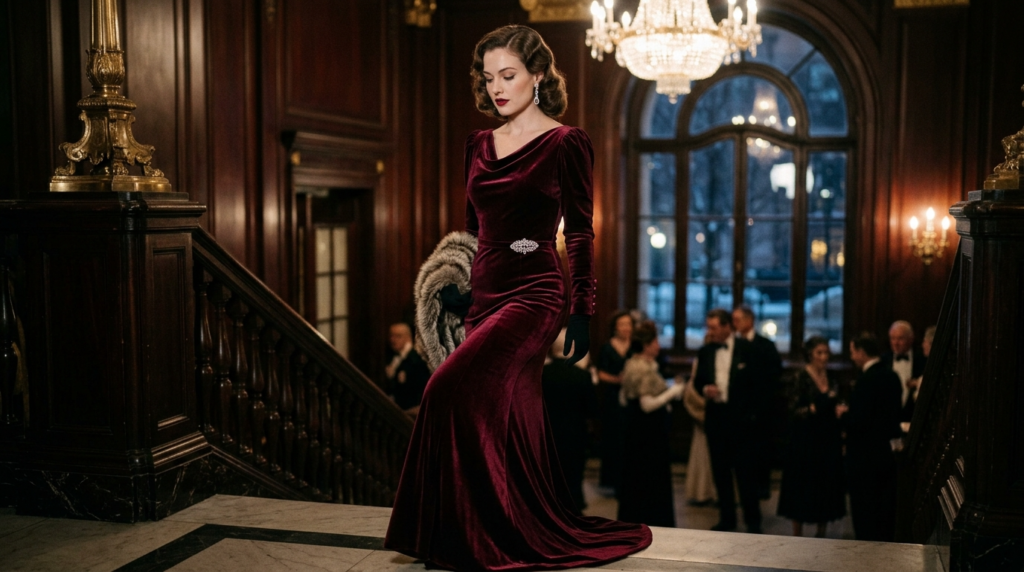
Long sleeve evening gowns offered an elegant and refined alternative to sleeveless formal wear during the 1930s. These dresses combined sophistication with graceful femininity, making them especially popular for winter events, formal dinners, and luxury evening occasions.
Unlike heavily structured sleeves from later decades, 1930s evening gown sleeves were usually soft and fluid. Designers focused on maintaining the era’s signature flowing silhouette while adding coverage and elegance.
Popular sleeve styles included:
- Slim fitted sleeves
- Bishop sleeves
- Sheer chiffon sleeves
- Velvet long sleeves
- Draped sleeve details
Long sleeve evening dresses often appeared especially glamorous in black-and-white Hollywood films because the added fabric enhanced movement and dramatic lighting effects.
Common fabrics used for sleeves included:
- Chiffon
- Silk
- Velvet
- Lace
- Satin overlays
Sheer sleeves became particularly fashionable because they added elegance without making gowns feel overly heavy or conservative.
Today, long sleeve 1930s evening gowns remain a major inspiration for:
- Winter formal fashion
- Vintage-inspired bridal gowns
- Red carpet couture
- Luxury gala dresses
Modern recreations often combine vintage sleeve silhouettes with minimalist tailoring for a timeless and sophisticated appearance.
Halter Neck 1930s Gowns
Halter neck gowns emerged as one of the most glamorous neckline trends of the 1930s. These dresses highlighted the shoulders, neckline, and upper back while maintaining the elegant fluidity associated with vintage evening fashion.
Halter neck evening gowns became especially popular in Hollywood because they photographed beautifully and enhanced the sleek silhouettes actresses wore on screen.
Typical features included:
- Soft draped necklines
- Open backs
- Satin bias-cut skirts
- Figure-skimming silhouettes
- Elegant shoulder exposure
The halter neckline naturally elongated the body and emphasized graceful posture, making it one of the most flattering evening gown styles of the era.
Because many halter gowns used bias-cut construction, the dresses flowed beautifully with movement while still maintaining close-fitting silhouettes.
Modern fashion designers continue recreating 1930s halter neck gowns for:
- Red carpet fashion
- Bridal receptions
- Luxury evening events
- Vintage-inspired formal wear
Contemporary versions often incorporate:
- Minimalist satin fabrics
- High slits
- Open-back details
- Metallic fabrics
- Modern draping techniques
The timeless elegance of the halter neck silhouette keeps it relevant even in modern fashion trends.
Velvet Evening Gowns
Velvet evening gowns represented luxury, sophistication, and dramatic glamour during the 1930s. The rich texture of velvet added depth and elegance that looked especially stunning under evening lighting and Hollywood cinematography.
Unlike lightweight satin gowns, velvet dresses created a slightly heavier and more regal appearance. These gowns became particularly popular for winter formal events and high-society gatherings.
The luxurious texture of velvet enhanced:
- Rich jewel tones
- Elegant draping
- Sculpted silhouettes
- Dramatic evening styling
Popular jewel-tone velvet colors during the 1930s included:
- Emerald green
- Sapphire blue
- Deep burgundy
- Plum purple
- Black
- Ruby red
These colors photographed beautifully in classic Hollywood films and became strongly associated with vintage luxury fashion.
Velvet evening gowns were often styled with:
- Long gloves
- Faux fur wraps
- Art Deco jewelry
- Satin heels
- Dramatic hairstyles
The combination created a sophisticated and glamorous old Hollywood aesthetic that still feels timeless today.
Modern designers frequently revive velvet evening gowns during fall and winter fashion seasons because the fabric instantly creates richness and elegance. Vintage-inspired velvet gowns remain especially popular for:
- Formal galas
- Holiday parties
- Black-tie weddings
- Luxury evening events
- Winter red carpet fashion
The enduring appeal of velvet proves how influential 1930s evening fashion continues to be in modern formal wear.
From fluid bias-cut satin gowns to dramatic velvet evening dresses, the 1930s created some of the most iconic formal fashion silhouettes in history. These styles continue inspiring designers because they combine elegance, femininity, and sophistication in ways that still feel effortlessly glamorous today.
Fabrics Commonly Used in 1930s Evening Gowns
One of the most important elements that defined the beauty of the 1930s evening gown was fabric choice. Designers during this era understood that the right material could completely transform the silhouette, movement, and elegance of a dress. Instead of relying heavily on stiff structures or excessive embellishments, the 1930s evening gown focused on fluid draping, luxurious textures, and graceful motion.
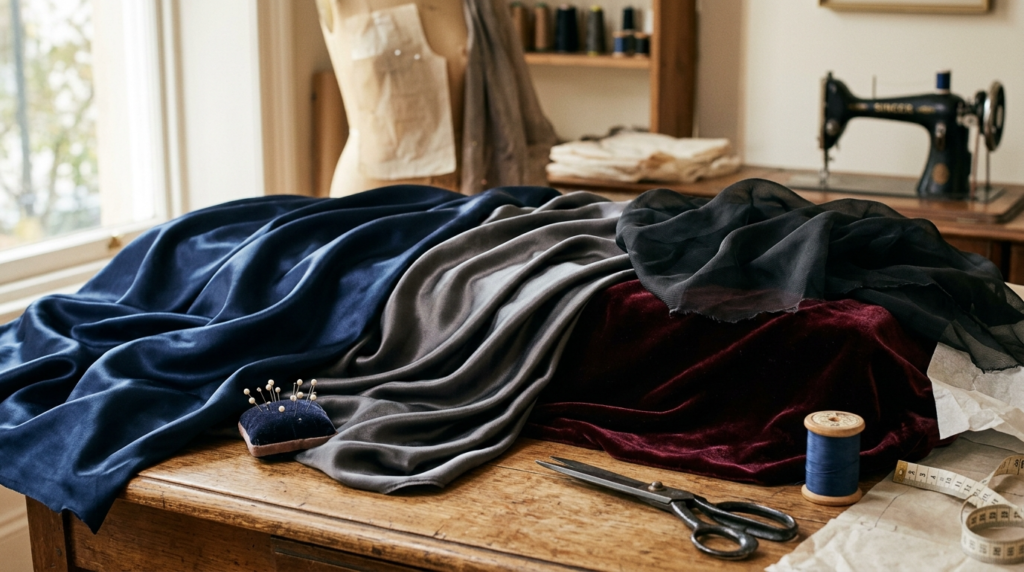
The fabrics used in a 1930s evening gown were carefully selected to create soft silhouettes that moved naturally with the body. This approach helped establish the timeless old Hollywood glamour that still inspires modern fashion designers today. Whether made from satin, velvet, chiffon, or silk, nearly every 1930s evening gown emphasized sophistication through movement and refined simplicity.
Satin and Silk Charmeuse
Satin became the signature fabric of the 1930s evening gown. Few materials captured the luxurious elegance of old Hollywood fashion better than satin and silk charmeuse. These fabrics reflected light beautifully and enhanced the fluid draping that defined 1930s formal wear.
A satin 1930s evening gown often appeared almost liquid-like as it moved across the body. The glossy finish created a glamorous effect on screen, which made satin especially popular in Hollywood films during the decade.
Silk charmeuse was another highly desired fabric for a 1930s evening gown because it combined softness with graceful movement. Unlike stiffer textiles, charmeuse hugged the body gently and complemented the bias-cut techniques that became iconic during the era.
Designers frequently used satin and silk charmeuse for:
- Bias-cut evening gowns
- Backless formal dresses
- Draped necklines
- Floor-length Hollywood gowns
- Elegant bridal-inspired evening wear
The smooth texture of these fabrics enhanced the feminine silhouettes associated with the classic 1930s evening gown aesthetic.
Even today, modern vintage-inspired designers continue using satin and silk charmeuse to recreate authentic 1930s evening gown styles because these fabrics remain timelessly elegant.
Velvet and Panne Velvet
Velvet added richness, texture, and dramatic sophistication to the 1930s evening gown. While satin created sleek glamour, velvet introduced depth and luxury that worked beautifully for winter formal wear and evening events.
A velvet 1930s evening gown often featured elegant draping combined with soft, rich textures that looked incredibly glamorous under evening lighting. Hollywood actresses frequently wore velvet gowns in films and publicity portraits because the fabric photographed beautifully in black-and-white cinema.
Panne velvet also became popular during the decade. Unlike traditional velvet, panne velvet featured a crushed finish that reflected light in different directions, creating a shimmering effect ideal for glamorous evening fashion.
Popular jewel-tone colors for velvet 1930s evening gown designs included:
- Emerald green
- Sapphire blue
- Deep burgundy
- Black
- Plum purple
- Ruby red
These rich colors enhanced the luxurious appearance of formal dresses while complementing the elegant silhouettes of the era.
Velvet fabrics were commonly used in:
- Long sleeve evening gowns
- Winter gala dresses
- Draped Hollywood-inspired gowns
- Sophisticated formal evening wear
The luxurious texture of velvet helped elevate the 1930s evening gown into a symbol of refined elegance and timeless glamour.
Chiffon Overlays
Chiffon played an important role in creating the soft, romantic movement associated with the 1930s evening gown. Lightweight and sheer, chiffon added delicate layers that floated gracefully with every movement.
Designers often used chiffon overlays to soften the appearance of satin or silk gowns while adding dimension and elegance. A chiffon overlay could transform a simple formal dress into something ethereal and cinematic.
Chiffon was especially popular for:
- Flowing skirts
- Cape sleeves
- Draped shoulder details
- Romantic evening layers
- Soft formal silhouettes
Many 1930s evening gown designs featured chiffon combined with satin underlayers to create contrast between shine and softness. This combination produced gowns that appeared fluid and elegant without feeling overly heavy.
Because chiffon moved so naturally, it perfectly matched the era’s focus on graceful silhouettes and understated glamour.
Lace Accents and Embellishments
Although the 1930s evening gown generally favored simplicity over excessive decoration, lace accents still played an important role in formal fashion. Instead of covering entire dresses with embellishment, designers used lace strategically to add softness and elegance.
Popular lace applications included:
- Lace bodices
- Sheer lace sleeves
- Neckline accents
- Open-back detailing
- Delicate appliqué work
These subtle embellishments enhanced the romantic aesthetic of vintage evening gowns without overpowering the fluid silhouette.
French lace and Chantilly lace became especially desirable because of their delicate appearance and luxurious texture. Many couture-inspired 1930s evening gown designs used lace to create feminine contrast against smooth satin or silk fabrics.
Even modern bridal and formal fashion continues drawing inspiration from these elegant lace details.
Metallic Fabrics During the Hollywood Glamour Era
The glamour of Hollywood cinema heavily influenced 1930s evening gown fashion, and metallic fabrics became increasingly popular for creating dramatic evening looks.
Silver and gold fabrics reflected studio lighting beautifully, helping actresses appear radiant on screen. Designers incorporated metallic textiles into evening gowns to create shimmer and sophistication without relying on heavy beadwork.
Metallic fabrics were often used for:
- Draped evening gowns
- Art Deco-inspired formal dresses
- Red carpet-inspired fashion
- Glamorous Hollywood evening wear
Although metallic textiles were less common than satin or velvet, they represented the luxurious fantasy associated with old Hollywood glamour.
Many formal gowns combined metallic fabrics with soft draping to maintain the era’s signature elegance while adding visual drama.
Why Drape Mattered More Than Volume
One of the biggest differences between the 1930s evening gown and formal fashion from other decades was the emphasis on drape rather than volume.
Unlike the dramatic ball gowns of the 1950s or heavily structured silhouettes of later eras, the 1930s evening gown focused on creating graceful movement close to the body. Designers wanted dresses to flow naturally rather than appear stiff or oversized.
This shift toward draping reflected the fashion philosophy of the time:
- Simplicity over excess
- Elegance through movement
- Feminine silhouettes
- Sophisticated tailoring
- Luxurious minimalism
Bias-cut techniques became especially important because they allowed fabric to contour softly around the body while maintaining fluidity.
Instead of relying on layers of crinoline or structured undergarments, a 1930s evening gown achieved glamour through expertly cut fabric and graceful construction.
This emphasis on drape remains one of the reasons 1930s fashion still feels modern and wearable today.
Fabric Movement and Elegance
Movement was central to the beauty of every 1930s evening gown. Designers understood that elegance was not only about appearance but also about how a dress behaved while walking, dancing, or standing under evening lighting.
Soft fabrics like satin, silk, chiffon, and velvet created gowns that moved gracefully with the wearer. This fluidity gave the 1930s evening gown its signature romantic and cinematic quality.
The movement of fabric enhanced:
- Bias-cut silhouettes
- Draped necklines
- Open-back designs
- Floor-length gowns
- Hollywood-inspired glamour
Rather than overwhelming the body with decoration, the 1930s evening gown celebrated natural femininity through flowing lines and elegant motion.
This timeless approach to evening wear continues influencing modern designers, especially in red carpet fashion, luxury bridal collections, and vintage-inspired couture.
Even nearly a century later, the fabrics used in the 1930s evening gown remain symbols of sophistication, romance, and enduring old Hollywood elegance.
Iconic Hollywood Influence on 1930s Evening Fashion
The golden age of Hollywood played a massive role in shaping the popularity and timeless appeal of the 1930s evening gown. During the Great Depression, millions of people escaped everyday struggles by going to the movies, where they were introduced to a glamorous world filled with luxury, sophistication, and unforgettable fashion.
As audiences watched elegant actresses glide across the screen in flowing satin dresses and bias-cut gowns, the 1930s evening gown quickly became a symbol of beauty, femininity, and Hollywood glamour. Cinema didn’t just entertain people during the 1930s — it transformed global fashion trends and forever changed the way women viewed evening wear.
The connection between Hollywood and the 1930s evening gown remains one of the strongest fashion influences in history. Even today, modern red carpet fashion continues borrowing heavily from the elegance and sophistication first popularized during this iconic era.
Famous Actresses Known for Glamorous Gowns
Several legendary actresses became closely associated with the glamorous style of the 1930s evening gown. Their elegant screen appearances helped define old Hollywood fashion and inspired women around the world to embrace sophisticated evening wear.
Jean Harlow became one of the most famous style icons of the decade. Known for her sleek platinum blonde image and figure-hugging satin gowns, she helped popularize the bias-cut 1930s evening gown that became synonymous with Hollywood elegance. Her dresses often featured dramatic draping, open backs, and luxurious satin fabrics that photographed beautifully on screen.
Greta Garbo represented a more mysterious and understated version of 1930s glamour. Her evening gowns frequently featured fluid silhouettes, elegant tailoring, and minimalist sophistication that still feels modern today.
Marlene Dietrich helped push fashion boundaries by blending feminine glamour with bold tailoring and daring evening styles. Her influence made the 1930s evening gown appear more confident, dramatic, and fashion-forward.
Joan Crawford became famous for glamorous evening dresses with strong silhouettes, luxurious fabrics, and dramatic studio styling. Her iconic gowns influenced countless women seeking elegant formal fashion inspiration.
These actresses transformed the 1930s evening gown into more than just clothing — it became a symbol of aspiration, sophistication, and cinematic fantasy.
Influence of Black-and-White Cinema Fashion
Black-and-white films significantly shaped the design and styling of the 1930s evening gown. Because movies lacked color, costume designers focused heavily on texture, shine, draping, and silhouette to create visual impact on screen.
Fabrics like satin, silk charmeuse, velvet, and metallic textiles became especially important because they reflected studio lighting beautifully. A satin 1930s evening gown could appear luminous under cinematic lighting, giving actresses an almost ethereal presence on film.
The absence of color also influenced fashion details in unique ways. Designers emphasized:
- Dramatic draping
- Open-back silhouettes
- Elegant movement
- Figure-skimming tailoring
- Soft reflective fabrics
These elements helped create depth and glamour in black-and-white cinematography.
Because audiences saw these glamorous gowns projected on large movie screens, the visual impact was enormous. Women everywhere wanted to recreate the same elegant Hollywood style in their own wardrobes.
The cinematic influence of black-and-white films helped establish the timeless image of the 1930s evening gown that continues inspiring modern fashion today.
Studio Costume Designers and Couture Inspiration
Behind every iconic 1930s evening gown seen on screen were talented Hollywood costume designers who helped shape the visual identity of the era.
Designers working for major film studios created elaborate evening wear that blended couture fashion with cinematic fantasy. Their goal was not simply to dress actresses but to create unforgettable visual glamour that captivated audiences.
Costume designers frequently drew inspiration from Paris couture houses while adapting styles for film production and camera lighting. They focused on:
- Bias-cut construction
- Luxurious draping
- Elegant silhouettes
- Fluid movement
- Sophisticated tailoring
Many gowns were custom-designed specifically to enhance an actress’s appearance on screen.
One of the most influential fashion innovators connected to the 1930s evening gown was Madeleine Vionnet, whose revolutionary bias-cut techniques transformed evening fashion. Her work inspired countless Hollywood costume designers and helped define the flowing silhouettes associated with old Hollywood glamour.
The relationship between Hollywood costume design and couture fashion became incredibly influential. Films introduced high-fashion evening wear to mainstream audiences, making glamorous formal dresses more desirable and accessible.
This connection between cinema and couture remains visible in modern luxury fashion and red carpet styling.
Red Carpet Origins in Classic Hollywood
The origins of modern red carpet fashion can be traced directly back to the glamour of the 1930s evening gown. During Hollywood’s golden age, film premieres and celebrity appearances became major public events where actresses showcased elegant formal wear.
Studios carefully managed celebrity images, and evening gowns played an essential role in building glamorous star personas. Public appearances featured luxurious satin gowns, velvet dresses, sparkling accessories, and dramatic styling that reinforced Hollywood’s fantasy appeal.
These early celebrity fashion moments established many traditions still associated with red carpet style today:
- Designer evening gowns
- Dramatic silhouettes
- Luxurious fabrics
- Elegant jewelry
- Sophisticated hair and makeup
- Couture-inspired fashion statements
The 1930s evening gown became one of the first true red carpet fashion symbols, setting the standard for glamorous celebrity dressing.
Modern awards shows, film festivals, and celebrity events continue drawing inspiration from the old Hollywood elegance established during this era.
How Films Shaped Women’s Evening Wear Trends
Movies had a direct influence on women’s fashion choices during the 1930s. Unlike modern fashion advertising, cinema served as one of the most powerful style inspirations of the decade.
Women watched actresses wearing glamorous 1930s evening gowns and immediately wanted similar styles for:
- Formal parties
- Weddings
- Dinners
- Theater events
- Galas
- Social gatherings
As films popularized elegant evening fashion, trends quickly spread into department stores, sewing patterns, and fashion magazines.
Hollywood-inspired trends included:
- Bias-cut satin gowns
- Open-back evening dresses
- Floor-length silhouettes
- Halter necklines
- Velvet formal gowns
- Draped evening wear
Even women who could not afford couture clothing often recreated glamorous Hollywood styles through home sewing and affordable reproductions.
The influence of film made the 1930s evening gown one of the most recognizable and aspirational fashion styles of the twentieth century.
Lasting Impact on Modern Formal Fashion
The influence of the 1930s evening gown remains incredibly strong in modern fashion. Nearly every major formal wear trend still borrows elements from old Hollywood glamour and vintage evening fashion.
Modern designers continue referencing the 1930s evening gown through:
- Bias-cut silhouettes
- Satin slip dresses
- Open-back gowns
- Minimalist elegance
- Fluid draping
- Hollywood-inspired tailoring
Contemporary red carpet fashion frequently echoes the sophistication of 1930s evening wear because the silhouettes remain timeless and universally flattering.
Luxury bridal designers also draw inspiration from vintage 1930s evening gown styles when creating:
- Silk wedding dresses
- Minimalist bridal gowns
- Draped satin silhouettes
- Backless formal designs
The continued popularity of old Hollywood aesthetics proves how influential this era remains in fashion history.
One reason the 1930s evening gown continues inspiring designers is its perfect balance between simplicity and glamour. Unlike heavily embellished trends that eventually feel dated, the fluid elegance of 1930s formal fashion remains sophisticated across generations.
Even in 2026, the timeless beauty of the 1930s evening gown still represents luxury, romance, femininity, and classic Hollywood sophistication.
How to Sew a 1930s Evening Gown
Sewing a 1930s evening gown is one of the most rewarding projects for vintage fashion lovers and sewing enthusiasts. The elegance of old Hollywood glamour, combined with flowing silhouettes and luxurious fabrics, makes the 1930s evening gown both timeless and visually stunning. However, recreating authentic 1930s evening fashion also requires patience, precision, and an understanding of vintage sewing techniques.
Unlike many modern formal dresses, a true 1930s evening gown relies heavily on fabric drape, bias-cut construction, and careful tailoring rather than structured shaping. Every seam, curve, and fabric choice contributes to the graceful movement that defines vintage Hollywood evening wear.
Whether you are an experienced sewist or attempting your first vintage-inspired project, learning how to sew a 1930s evening gown can help you create a truly elegant and custom formal dress.
Choosing Authentic Vintage Sewing Patterns
The first step in creating a 1930s evening gown is selecting the right sewing pattern. Authentic vintage sewing patterns from the 1930s often feature the classic silhouettes associated with old Hollywood glamour, including:
- Bias-cut dresses
- Floor-length skirts
- Open-back gowns
- Halter necklines
- Draped bodices
- Long flowing sleeves
Original vintage patterns can sometimes be found through:
- Etsy vintage sellers
- Antique shops
- Vintage sewing communities
- Online pattern archives
- Reproduction pattern companies
Because authentic vintage patterns may use outdated sizing systems, many sewists choose modern reproduction patterns inspired by the 1930s evening gown. These updated patterns usually include clearer instructions and more inclusive sizing while still maintaining vintage styling.
When selecting a pattern, pay close attention to:
- Sewing difficulty level
- Fabric recommendations
- Bias-cut construction
- Closure types
- Lining requirements
For beginners, simpler satin slip-style gowns may be easier to manage than heavily draped or backless designs.
Understanding Bias-Cut Sewing Techniques
One of the most important techniques used in a 1930s evening gown is the bias cut. This sewing method involves cutting fabric diagonally across the grain rather than straight. Bias-cut construction allows fabric to stretch naturally and drape smoothly against the body.
The bias cut became a defining feature of the 1930s evening gown because it created:
- Fluid movement
- Soft silhouettes
- Body-skimming elegance
- Natural draping
- Feminine shaping without stiffness
However, sewing on the bias can also be challenging because fabric becomes more delicate and stretchy.
When working with bias-cut patterns:
- Handle fabric gently to avoid distortion
- Let fabric rest before hemming
- Avoid pulling while sewing
- Use fine pins or clips carefully
- Stabilize seams when needed
Many sewists allow a bias-cut 1930s evening gown to hang for at least 24 hours before hemming. This gives the fabric time to stretch naturally so the final hemline remains even.
Mastering bias-cut sewing techniques is essential for achieving authentic vintage draping and elegant movement.
Best Fabrics for Vintage Recreations
Fabric selection plays a huge role in successfully recreating a 1930s evening gown. Since the era emphasized fluidity and elegance, lightweight fabrics with graceful drape work best.
Popular fabrics for vintage-inspired evening gowns include:
- Satin
- Silk charmeuse
- Velvet
- Chiffon
- Crepe back satin
- Lightweight silk blends
- Rayon challis
Satin remains one of the most iconic choices because it captures the glamorous shine associated with old Hollywood fashion. Silk charmeuse is also highly desirable because of its soft drape and luxurious appearance.
Chiffon can be used for:
- Overlay skirts
- Flowing sleeves
- Shoulder draping
- Romantic details
Velvet works beautifully for winter-inspired 1930s evening gown styles and creates rich texture for formal occasions.
When choosing fabric, prioritize movement over stiffness. The beauty of a 1930s evening gown comes from the way the fabric flows naturally around the body.
Common Sewing Challenges With Slippery Fabrics
Many fabrics traditionally used for a 1930s evening gown can be difficult to sew, especially satin and silk. These slippery materials tend to shift, stretch, and slide during cutting and stitching.
Common sewing challenges include:
- Uneven seams
- Fabric puckering
- Distorted bias edges
- Slipping while cutting
- Wavy hems
- Needle marks on delicate fabrics
To make sewing easier:
- Use a rotary cutter instead of scissors
- Cut fabric on a large flat surface
- Use pattern weights for stability
- Sew slowly and carefully
- Choose sharp fine needles
- Use lightweight thread
A walking foot attachment can also help feed slippery fabrics evenly through the sewing machine.
Pressing techniques are equally important when constructing a 1930s evening gown. Always use low heat and a pressing cloth when working with satin or velvet to avoid damaging the fabric surface.
Patience is key. Vintage evening gowns require slower and more careful sewing than casual garments.
Tips for Fitting Vintage Silhouettes
A well-fitted silhouette is essential for achieving the elegant appearance of a true 1930s evening gown. Since many gowns from this era skim closely against the body, accurate fitting becomes especially important.
Unlike modern bodycon dresses, the 1930s evening gown should feel graceful and fluid rather than tight or restrictive.
Key fitting areas include:
- Bust shaping
- Waist placement
- Hip drape
- Shoulder fit
- Back shaping
- Hem length
Making a muslin test garment before cutting expensive fabric is highly recommended. This allows adjustments to be made before working with delicate materials like satin or silk.
Vintage patterns often fit differently from modern sizing, so always rely on body measurements rather than ready-to-wear clothing sizes.
Small adjustments can dramatically improve the final appearance of a vintage-inspired gown.
Modern Adjustments for Comfort and Wearability
While many sewists aim for historical accuracy, modern adaptations can make a 1930s evening gown more comfortable and practical for contemporary wear.
Popular modern adjustments include:
- Adding hidden zippers
- Incorporating stretch lining
- Raising necklines slightly
- Adjusting back depth
- Adding bra-friendly support
- Using softer lining fabrics
Modern fabrics can also improve wearability while maintaining vintage aesthetics. For example, stretch silk satin blends provide comfort while still preserving elegant drape.
Some sewists slightly modify silhouettes to suit modern movement and comfort preferences without losing the timeless Hollywood-inspired look.
These updates allow a 1930s evening gown to feel both authentic and wearable for:
- Weddings
- Formal dinners
- Galas
- Red carpet events
- Vintage-themed parties
Balancing vintage style with modern comfort helps make the gown more practical for real-world occasions.
Beginner vs Advanced Sewing Considerations
Not every 1930s evening gown is beginner-friendly. Some designs require advanced sewing techniques, especially gowns featuring:
- Complex draping
- Heavy bias-cut construction
- Open-back details
- Silk fabrics
- Intricate closures
- Delicate embellishments
Beginners may want to start with:
- Simple slip dress silhouettes
- Minimal seams
- Basic satin gowns
- Easy draped styles
- Modern reproduction patterns
Intermediate and advanced sewists can explore more complex vintage techniques and couture-inspired construction methods.
Even experienced sewists often find the 1930s evening gown challenging because of the precision required when handling delicate fabrics and bias-cut shapes.
Still, the effort is incredibly rewarding. A beautifully sewn 1930s evening gown captures timeless elegance in a way few other garments can. The graceful draping, luxurious fabrics, and old Hollywood glamour continue making these vintage-inspired gowns some of the most sophisticated formal dresses ever created.
Modern Ways to Wear a 1930s Evening Gown
The timeless elegance of the 1930s evening gown continues influencing modern fashion in remarkable ways. Although these glamorous dresses originated nearly a century ago, their fluid silhouettes, luxurious fabrics, and old Hollywood sophistication still feel incredibly stylish today. In fact, many current fashion trends — especially minimalist satin gowns and vintage-inspired formalwear — draw direct inspiration from the classic 1930s evening gown.
One reason the 1930s evening gown remains so popular is its versatility. Whether styled for weddings, luxury galas, red carpet events, or vintage-themed parties, these gowns offer an effortless balance of romance, glamour, and sophistication.
Modern fashion lovers appreciate how a 1930s evening gown can feel both vintage and contemporary at the same time. With the right styling choices, these elegant dresses fit beautifully into modern wardrobes while preserving their iconic Hollywood charm.
Vintage-Inspired Weddings
One of the most popular modern uses for a 1930s evening gown is vintage-inspired weddings. Brides today are increasingly drawn toward elegant, minimalist silhouettes instead of heavily embellished ball gowns, making the 1930s evening gown a perfect source of bridal inspiration.
The soft draping and bias-cut construction associated with 1930s evening fashion create a romantic and timeless bridal look that photographs beautifully.
Popular bridal-inspired features include:
- Satin bias-cut gowns
- Open-back silhouettes
- Silk charmeuse fabrics
- Draped cowl necklines
- Long flowing skirts
- Elegant train details
A bridal-style 1930s evening gown works especially well for:
- Intimate weddings
- Luxury ceremonies
- Art Deco wedding themes
- Destination weddings
- Vintage-inspired receptions
Modern brides often pair these gowns with soft Hollywood curls, pearl jewelry, and minimalist accessories to enhance the vintage glamour aesthetic.
Even wedding guest fashion has embraced the elegance of the 1930s evening gown, especially for formal black-tie celebrations.
Great Gatsby and Old Hollywood Parties
The glamour of the 1930s evening gown makes it a favorite choice for themed parties inspired by vintage Hollywood and Art Deco fashion. Although the Great Gatsby aesthetic is more closely connected to the 1920s, many people combine 1920s and 1930s influences for elegant vintage-inspired events.
A 1930s evening gown instantly captures the sophistication associated with classic cinema and old Hollywood luxury.
Popular event styles include:
- Hollywood-themed parties
- Vintage galas
- Art Deco events
- Formal masquerades
- Luxury dinner parties
- Jazz-age celebrations
For these occasions, many women choose:
- Satin evening gowns
- Velvet formal dresses
- Backless silhouettes
- Halter neck gowns
- Bias-cut vintage styles
Accessories play a huge role in completing the look. Long gloves, faux fur wraps, rhinestone jewelry, and vintage-inspired hairstyles help recreate the glamorous atmosphere of the era.
The cinematic elegance of the 1930s evening gown makes it ideal for creating dramatic and unforgettable fashion moments.
Red Carpet Inspired Fashion Styling
Modern red carpet fashion continues drawing heavy inspiration from the 1930s evening gown. Many celebrity stylists reference old Hollywood glamour because the silhouettes remain timeless, flattering, and sophisticated.
Today’s luxury designers frequently reinterpret classic 1930s evening fashion through:
- Minimalist satin gowns
- Figure-skimming silhouettes
- Open-back designs
- Draped necklines
- Elegant floor-length dresses
- Bias-cut tailoring
Contemporary celebrities often wear vintage-inspired gowns that closely resemble authentic 1930s evening gown styles during:
- Film premieres
- Award shows
- Fashion galas
- Luxury events
- Editorial photo shoots
The elegance of old Hollywood styling continues influencing modern formalwear because it feels refined without appearing overly complicated.
To create a modern red carpet-inspired look, many fashion lovers combine a vintage-style 1930s evening gown with:
- Sleek hairstyles
- Minimal jewelry
- Neutral makeup
- Metallic heels
- Structured evening clutches
This combination creates a polished appearance that feels both classic and contemporary.
Formal Galas and Luxury Events
The 1930s evening gown remains one of the most elegant options for formal galas and luxury evening events. The flowing silhouettes and luxurious fabrics naturally suit sophisticated settings where timeless glamour is appreciated.
Modern formal occasions where a 1930s evening gown works beautifully include:
- Black-tie galas
- Charity events
- Opera nights
- Luxury weddings
- Formal dinners
- Fashion events
Satin and velvet gowns inspired by 1930s evening fashion create a graceful presence that stands out without relying on excessive embellishment.
Unlike trendy fast-fashion eveningwear, a vintage-inspired 1930s evening gown feels refined and enduring. The focus on elegant tailoring and fluid movement creates a more elevated and sophisticated appearance.
For winter events, velvet 1930s evening gowns paired with faux fur wraps and statement jewelry create dramatic old Hollywood glamour.
For warmer climates, lightweight silk or satin gowns offer timeless sophistication with graceful movement.
Combining Vintage Gowns With Modern Accessories
One of the easiest ways to make a 1930s evening gown feel modern is by styling it with contemporary accessories. This balance between vintage elegance and modern fashion creates a fresh and wearable look.
Modern accessories help prevent a vintage gown from feeling overly costume-like while still preserving its classic beauty.
Popular modern styling combinations include:
- Minimalist heels with satin gowns
- Structured handbags
- Delicate gold jewelry
- Modern makeup looks
- Sleek hairstyles
- Contemporary earrings
Many fashion lovers also mix vintage silhouettes with bold modern fashion details such as:
- Statement cuffs
- Metallic shoes
- Sculptural handbags
- Modern tailoring adjustments
The simplicity of the 1930s evening gown makes it incredibly versatile for modern styling experimentation.
This blend of vintage and contemporary fashion reflects current trends toward timeless wardrobe pieces rather than overly trend-driven styles.
Minimalist Elegance Trends in 2026
Minimalist formalwear trends in 2026 strongly echo the elegance of the 1930s evening gown. Fashion is currently embracing clean silhouettes, luxurious fabrics, and understated glamour — all signature elements of 1930s evening fashion.
Modern minimalist eveningwear trends include:
- Satin slip gowns
- Bias-cut dresses
- Neutral color palettes
- Soft draping
- Elegant simplicity
- Fluid silhouettes
These trends closely resemble authentic vintage 1930s evening gown designs because both prioritize elegance through movement rather than excessive decoration.
As sustainability and timeless fashion become increasingly important, many designers are moving away from heavily embellished fast-fashion gowns in favor of sophisticated styles inspired by old Hollywood glamour.
The continued popularity of minimalist luxury fashion proves how modern the 1930s evening gown still feels even in 2026.
Celebrity-Inspired Vintage Fashion Looks
Celebrity fashion continues helping revive interest in the 1930s evening gown. Many actresses, models, and stylists regularly reference vintage Hollywood glamour for red carpet appearances and editorial fashion shoots.
Modern celebrity-inspired vintage looks often feature:
- Satin bias-cut gowns
- Backless evening dresses
- Silk draping
- Hollywood waves
- Minimalist accessories
- Elegant monochrome styling
Fashion icons frequently embrace the timeless sophistication associated with old Hollywood because these silhouettes remain universally flattering and visually striking.
Social media platforms have also helped popularize vintage-inspired formalwear among younger audiences. Many fashion influencers now incorporate 1930s evening gown aesthetics into modern styling content, making vintage glamour feel accessible and contemporary.
The enduring influence of celebrity fashion ensures that the 1930s evening gown continues inspiring new generations of fashion lovers.
Nearly a century after its rise to popularity, the 1930s evening gown remains one of the most elegant and influential styles in formal fashion history. Its combination of fluid silhouettes, luxurious fabrics, and effortless sophistication continues proving that true glamour never goes out of style.
Accessories That Match 1930s Evening Gowns
The beauty of a 1930s evening gown goes far beyond the dress itself. Accessories played a major role in completing the glamorous old Hollywood look that defined formal fashion during the decade. From sparkling Art Deco jewelry to elegant satin heels and dramatic fur wraps, every detail was carefully chosen to enhance the sophistication of the 1930s evening gown.
One reason the 1930s evening gown remains so timeless is the effortless balance between elegance and simplicity. Accessories were rarely overwhelming or overly flashy. Instead, they complemented the graceful silhouette of the gown while adding touches of luxury and refinement.
Modern vintage fashion lovers still draw inspiration from these classic styling techniques because they continue feeling polished, romantic, and incredibly glamorous today.
Jewelry
Jewelry during the 1930s was heavily influenced by the Art Deco movement, which emphasized geometric shapes, luxurious materials, and elegant sophistication. The right jewelry could instantly elevate a 1930s evening gown and create a refined Hollywood-inspired appearance.
Unlike some earlier fashion eras that favored excessive embellishment, accessories paired with a 1930s evening gown were usually carefully balanced to maintain elegance without overpowering the dress.
Art Deco-Inspired Accessories
Art Deco jewelry became one of the defining fashion influences of the 1930s. These accessories featured:
- Geometric patterns
- Symmetrical designs
- Crystal embellishments
- Metallic finishes
- Sleek elegant shapes
Art Deco pieces paired beautifully with the clean lines and fluid silhouettes of a 1930s evening gown. Long pendant necklaces, sparkling bracelets, and structured cocktail rings added glamour while preserving the sophistication associated with old Hollywood fashion.
Silver and platinum tones became especially popular because they reflected light beautifully under evening lighting and complemented satin evening gowns perfectly.
Pearl Necklaces and Statement Earrings
Pearls were considered one of the most elegant accessories for a 1930s evening gown. Long pearl necklaces added softness and sophistication while enhancing the graceful movement of floor-length gowns.
Women often styled pearl jewelry with:
- Satin bias-cut dresses
- Velvet evening gowns
- Backless formal dresses
- Halter neck silhouettes
Statement earrings also became increasingly fashionable during the 1930s. Because many evening gowns featured open necklines or dramatic back details, earrings helped frame the face without competing with the gown itself.
Popular styles included:
- Drop earrings
- Crystal chandelier earrings
- Pearl cluster designs
- Geometric Art Deco earrings
Even today, pearls and vintage-inspired statement earrings remain timeless choices for styling a 1930s evening gown.
Vintage Rhinestone Pieces
Rhinestone jewelry became highly popular during Hollywood’s golden age because it looked dazzling on screen. Studio lighting reflected beautifully against rhinestones, helping actresses appear glamorous in black-and-white films.
Vintage rhinestone accessories added sparkle and drama to evening fashion without requiring expensive gemstones. Common rhinestone accessories included:
- Brooches
- Evening bracelets
- Hair combs
- Cocktail rings
- Statement necklaces
A rhinestone accessory paired with a satin 1930s evening gown instantly created a classic Hollywood-inspired aesthetic.
Modern vintage-inspired fashion still embraces rhinestone jewelry because it captures the glamour and elegance associated with old Hollywood evening wear.
Shoes
Footwear played an important role in completing the sophisticated look of a 1930s evening gown. Shoes during this era were designed to complement the graceful silhouette of formal dresses while maintaining elegance and femininity.
Unlike chunky or heavily decorated footwear styles, shoes paired with a 1930s evening gown typically featured refined silhouettes and luxurious materials.
Satin Heels and Vintage Pumps
Satin heels became one of the most iconic footwear choices for formal evening wear during the 1930s. Their soft sheen matched beautifully with satin gowns and enhanced the luxurious appearance of vintage evening fashion.
Classic shoe styles included:
- Closed-toe satin pumps
- Peep-toe heels
- Elegant slingback shoes
- Low curved heels
- Delicate ankle straps
These styles paired effortlessly with floor-length evening gowns because they maintained the refined sophistication associated with old Hollywood glamour.
Neutral shades, metallic finishes, and black satin were especially popular because they complemented a wide range of evening gown colors.
Strappy Evening Sandals
Strappy sandals became increasingly fashionable during the late 1930s, especially for glamorous Hollywood-inspired evening looks.
Thin straps and elegant heel shapes created delicate, feminine footwear that worked beautifully with:
- Bias-cut satin gowns
- Open-back evening dresses
- Halter neck silhouettes
- Flowing chiffon gowns
Metallic strappy sandals in silver or gold added subtle glamour while keeping the overall styling elegant and refined.
Modern formal fashion continues using vintage-inspired strappy heels because they remain timelessly sophisticated with both vintage and contemporary gowns.
Elegant Metallic Footwear
Metallic footwear gained popularity during the Hollywood glamour era because reflective surfaces looked stunning under evening lighting and studio cameras.
Silver and gold shoes were often paired with:
- Black satin evening gowns
- Velvet formal dresses
- White silk gowns
- Metallic eveningwear
Metallic heels added glamour without overwhelming the elegant simplicity of the 1930s evening gown silhouette.
Today, metallic evening shoes remain one of the easiest ways to modernize a vintage-inspired formal look while still honoring classic Hollywood elegance.
Hairstyles
Hairstyles were essential to achieving the polished glamour associated with the 1930s evening gown. Hair during this era emphasized smooth waves, soft structure, and refined sophistication.
Hollywood actresses helped popularize elegant hairstyles that complemented the fluid silhouettes and luxurious fabrics of evening fashion.
Finger Waves
Finger waves became one of the most recognizable hairstyles of the 1930s. These sculpted waves framed the face beautifully and added vintage glamour to formal evening looks.
Finger waves paired especially well with:
- Satin evening gowns
- Art Deco jewelry
- Backless dresses
- Hollywood-inspired makeup
The sleek appearance of finger waves balanced the softness and movement of the 1930s evening gown silhouette perfectly.
Even today, finger waves remain a popular hairstyle choice for vintage weddings, formal galas, and old Hollywood-themed events.
Soft Hollywood Curls
Soft Hollywood curls created a more romantic and feminine alternative to structured finger waves. These glamorous curls became iconic thanks to film stars who wore them in classic Hollywood movies.
Hollywood curls worked beautifully with:
- Bias-cut satin gowns
- Velvet evening dresses
- Long flowing silhouettes
- Open-back formalwear
The soft movement of the curls echoed the graceful draping associated with the 1930s evening gown itself.
Modern red carpet styling frequently references these vintage curls because they continue feeling elegant and timeless.
Elegant Vintage Updos
Elegant updos became popular for showcasing dramatic necklines and backless gown designs. Many women styled their hair upward to highlight jewelry, shoulders, and open-back silhouettes.
Popular updo styles included:
- Soft chignons
- Low twisted buns
- Sculpted vintage rolls
- Romantic pinned curls
Vintage updos added sophistication while maintaining the refined glamour associated with old Hollywood fashion.
Gloves and Fur Wraps
Few accessories capture the luxury of the 1930s evening gown quite like long gloves and elegant fur wraps. These dramatic finishing touches became symbols of sophistication and formal glamour during the era.
Popular Luxury Accessories of the Era
Opera gloves were commonly worn with formal evening gowns and instantly elevated the elegance of a look. Long satin gloves paired beautifully with sleeveless or halter neck gowns, creating a refined and polished appearance.
Women often combined gloves with:
- Satin evening dresses
- Velvet gowns
- Rhinestone jewelry
- Evening clutches
These accessories reinforced the luxurious atmosphere associated with Hollywood-inspired formal fashion.
Faux Fur Styling Ideas
Fur wraps became especially popular during winter events and glamorous evening occasions. Although authentic fur was common historically, modern vintage styling often uses faux fur alternatives for ethical and sustainable fashion.
Faux fur wraps pair beautifully with:
- Velvet 1930s evening gowns
- Satin bias-cut dresses
- Minimalist formalwear
- Black-tie evening fashion
Classic faux fur colors include:
- Ivory
- Black
- Champagne
- Silver gray
A dramatic fur wrap instantly adds old Hollywood sophistication to a vintage-inspired formal outfit.
Evening Glamour Inspiration
The combination of gloves, jewelry, elegant shoes, and luxurious wraps helped transform the 1930s evening gown into a complete fashion statement rather than simply a dress.
These accessories emphasized:
- Graceful femininity
- Refined elegance
- Hollywood glamour
- Sophisticated styling
- Timeless luxury
Even in modern fashion, the accessories associated with the 1930s evening gown continue inspiring bridal wear, red carpet styling, and luxury evening fashion.
The enduring appeal of these vintage accessories proves that true glamour is timeless.
Where to Find 1930s Evening Gowns and Patterns
Finding the perfect 1930s evening gown has become easier than ever thanks to the growing popularity of vintage fashion, old Hollywood glamour, and timeless formalwear. Whether you are searching for an authentic vintage dress, a modern reproduction, or elegant evening gown patterns to sew your own gown, there are now countless resources available for vintage fashion lovers and sewists alike.
The enduring popularity of the 1930s evening gown has also increased demand for vintage-inspired dress sewing patterns, formal dress sewing patterns, and custom couture recreations. Many modern designers continue drawing inspiration from 1930s evening fashion because the silhouettes remain elegant, feminine, and flattering even in 2026.
From online marketplaces to vintage boutiques and sewing communities, here are the best places to find a stunning 1930s evening gown or authentic sewing patterns inspired by old Hollywood style.
Vintage Clothing Boutiques
Vintage clothing boutiques are one of the best places to search for an authentic 1930s evening gown. Many specialized vintage shops carefully curate rare formal dresses, old Hollywood gowns, and elegant vintage eveningwear from the 1930s and surrounding decades.
Shopping at a vintage boutique offers several advantages:
- Access to authentic vintage garments
- Expert knowledge from vintage fashion specialists
- Carefully preserved fabrics and details
- Unique one-of-a-kind evening gowns
- Historically accurate silhouettes
Because authentic 1930s evening gown pieces are relatively rare, many boutiques focus on restored or wearable vintage garments suitable for modern events.
Popular styles often found in vintage boutiques include:
- Satin bias-cut gowns
- Velvet formal dresses
- Backless evening gowns
- Long sleeve vintage gowns
- Art Deco-inspired eveningwear
Some vintage boutiques also carry reproduction evening gown patterns and vintage dress sewing patterns for customers interested in recreating the look themselves.
When shopping for a vintage 1930s evening gown, always pay attention to:
- Fabric condition
- Seam integrity
- Alterations
- Sizing differences
- Restoration quality
Authentic vintage fashion can be delicate, but the craftsmanship and elegance are often unmatched.
Reproduction Fashion Brands
Because original 1930s evening gown pieces can be expensive and difficult to find, many modern fashion brands now specialize in reproduction vintage fashion inspired by old Hollywood glamour.
Reproduction brands recreate the beauty of the 1930s evening gown while updating:
- Sizing
- Comfort
- Fabric durability
- Construction methods
- Modern wearability
These brands often produce:
- Satin evening gowns
- Bias-cut formal dresses
- Vintage-inspired bridal gowns
- Hollywood glamour eveningwear
- Art Deco fashion pieces
Many reproduction designers study authentic vintage garments carefully to preserve accurate silhouettes and draping techniques.
For shoppers who love the look of a 1930s evening gown but want modern convenience, reproduction fashion is often the perfect balance between vintage elegance and practical wearability.
Some brands also offer matching evening gown patterns and formal dress sewing patterns for sewists interested in creating custom vintage-inspired gowns at home.
Etsy Vintage Gown Sellers
Etsy has become one of the most popular online marketplaces for finding a 1930s evening gown, vintage evening fashion, and evening gown patterns inspired by old Hollywood style.
Many Etsy sellers specialize in:
- Authentic vintage gowns
- Handmade vintage recreations
- PDF dress sewing patterns
- Formal dress sewing patterns
- Bias-cut gown patterns
- Custom-made evening dresses
One of the biggest advantages of Etsy is the wide variety of styles available. Buyers can often find:
- Backless satin gowns
- Velvet evening dresses
- Halter neck vintage gowns
- Silk eveningwear
- Old Hollywood-inspired formal dresses
Etsy is also an excellent source for downloadable evening gown patterns and PDF dress sewing patterns that recreate authentic 1930s silhouettes.
Many sewists specifically search Etsy for:
- Vintage sewing patterns
- 1930s evening gown sewing patterns
- Formal gown templates
- Bias-cut dress patterns
- Vintage couture sewing inspiration
When purchasing from Etsy, it is helpful to review:
- Seller ratings
- Fabric descriptions
- Measurement charts
- Customer photos
- Return policies
The handmade and custom nature of many Etsy products makes it one of the best places to find unique vintage-inspired formal fashion.
PDF Sewing Pattern Marketplaces
For sewists who want to create their own 1930s evening gown, PDF sewing pattern marketplaces have become incredibly popular. These digital platforms offer instant access to downloadable evening gown patterns, dress sewing patterns, and formal dress sewing patterns inspired by vintage fashion.
PDF patterns are especially useful because they:
- Provide instant downloads
- Include modern instructions
- Offer multiple sizes
- Allow easy reprinting
- Make vintage sewing more accessible
Many marketplaces specialize in:
- Vintage sewing patterns
- Bias-cut evening gown patterns
- Old Hollywood-inspired gowns
- Satin slip dress patterns
- Formal dress sewing patterns
- Bridal-inspired eveningwear
A custom-sewn 1930s evening gown allows sewists to choose:
- Preferred fabrics
- Modern sizing adjustments
- Custom draping
- Personal embellishments
- Updated comfort features
Popular fabrics used alongside evening gown patterns include satin, silk charmeuse, chiffon, velvet, and crepe back satin.
Because the 1930s evening gown relies heavily on elegant draping and silhouette, many sewists appreciate the ability to personalize the fit and finish through custom sewing.
Modern PDF dress sewing patterns also make vintage-inspired fashion far more approachable for beginners compared to authentic antique sewing instructions.
Thrift Stores and Vintage Shops
Thrift stores and vintage shops can occasionally offer hidden treasures for anyone searching for a 1930s evening gown or vintage-inspired formalwear.
While authentic 1930s garments are relatively uncommon, many thrift stores carry:
- Vintage-style satin gowns
- Minimalist slip dresses
- Velvet formalwear
- Hollywood-inspired evening dresses
- Elegant vintage accessories
Some shoppers also repurpose modern dresses into vintage-inspired looks using:
- Alterations
- Draping techniques
- Vintage accessories
- Styling adjustments
Thrift shopping is especially popular among sustainable fashion enthusiasts who appreciate timeless formalwear instead of fast-fashion trends.
Vintage shops often provide a more curated experience than thrift stores, making it easier to find gowns that capture the elegance of the 1930s evening gown aesthetic.
Many vintage stores also sell:
- Sewing books
- Vintage fashion magazines
- Evening gown patterns
- Formal dress sewing patterns
- Vintage sewing supplies
This makes them valuable resources for both collectors and sewists.
Online Vintage Fashion Communities
Online vintage fashion communities have become an important resource for fans of the 1930s evening gown. These communities bring together collectors, sewists, historians, and fashion enthusiasts who share inspiration, styling advice, and shopping recommendations.
Vintage fashion groups often discuss:
- Authentic 1930s evening gown styling
- Sewing techniques
- Vintage fabric sourcing
- Evening gown patterns
- Dress sewing patterns
- Old Hollywood fashion inspiration
These communities can help beginners learn:
- How to identify authentic vintage garments
- Where to buy reproduction gowns
- Which formal dress sewing patterns are beginner-friendly
- How to style vintage eveningwear for modern events
Many experienced members also share tutorials for recreating vintage hairstyles, accessories, and bias-cut gown silhouettes.
For sewists, these groups are especially useful when working with complex vintage evening gown patterns or slippery fabrics like satin and silk.
The growing popularity of vintage glamour ensures that online communities remain active and inspiring sources of information.
Custom Dressmakers Inspired by 1930s Fashion
For those seeking a truly personalized formal look, custom dressmakers remain one of the best ways to create an authentic 1930s evening gown.
Custom couture designers can recreate:
- Bias-cut satin gowns
- Backless evening dresses
- Velvet formal gowns
- Old Hollywood-inspired silhouettes
- Vintage bridal gowns
Working with a custom dressmaker allows complete control over:
- Fabric selection
- Fit adjustments
- Neckline design
- Sleeve styles
- Embellishments
- Length and draping
Many couture designers use vintage evening gown patterns and historical references to ensure authenticity while still incorporating modern comfort features.
Custom dressmaking is particularly valuable for:
- Weddings
- Red carpet events
- Black-tie galas
- Luxury evening occasions
- Vintage-themed celebrations
Some designers even create fully bespoke gowns inspired directly by iconic Hollywood actresses and classic 1930s evening gown silhouettes.
Whether you choose a vintage boutique, reproduction fashion brand, Etsy seller, or downloadable evening gown patterns, there are now more ways than ever to embrace the elegance of the 1930s evening gown.
The timeless appeal of vintage glamour, luxurious fabrics, and graceful silhouettes continues making the 1930s evening gown one of the most sought-after styles in formal fashion history.
Why 1930s Evening Gowns Remain Timeless
Few fashion styles have maintained their elegance and relevance as successfully as the 1930s evening gown. Nearly a century after its rise to popularity, the 1930s evening gown continues inspiring designers, celebrities, brides, sewists, and vintage fashion lovers around the world. From luxury red carpet events to modern bridal collections, the influence of the 1930s evening gown can still be seen everywhere in contemporary formal fashion.
What makes the 1930s evening gown so timeless is its perfect balance of sophistication, simplicity, and femininity. Unlike heavily trend-driven styles that quickly feel outdated, the fluid silhouettes and understated glamour of 1930s evening fashion continue feeling elegant generation after generation.
The enduring popularity of the 1930s evening gown proves that true style never depends on excess. Instead, it comes from graceful tailoring, luxurious fabrics, and timeless design principles that still resonate strongly in 2026.
Elegant Silhouettes That Flatter Many Body Types
One of the biggest reasons the 1930s evening gown remains timeless is its universally flattering silhouette. Designers during the 1930s focused on creating dresses that enhanced natural body lines through draping and movement rather than rigid structure.
The classic 1930s evening gown often features:
- Bias-cut construction
- Soft waist shaping
- Flowing floor-length skirts
- Draped necklines
- Graceful body-skimming silhouettes
These elements allow the gown to move naturally with the body while creating an elongated and elegant appearance.
Unlike overly structured gowns that may feel restrictive, the fluid shape of a 1930s evening gown flatters many body types because it emphasizes softness and balance. The draping effect created by satin and silk fabrics helps create a graceful silhouette without appearing tight or uncomfortable.
Bias-cut evening gown patterns are especially popular because they contour gently around curves while maintaining fluid movement. This combination of comfort and elegance continues making the 1930s evening gown one of the most wearable formal fashion styles ever created.
Modern designers still rely heavily on vintage-inspired dress sewing patterns and evening gown patterns influenced by 1930s silhouettes because these designs remain timelessly flattering.
Minimalist Luxury and Sophistication
Another reason the 1930s evening gown continues feeling modern is its minimalist approach to luxury. Instead of relying on excessive embellishment, designers achieved glamour through:
- Luxurious fabrics
- Expert draping
- Elegant tailoring
- Clean silhouettes
- Sophisticated movement
This understated elegance feels especially relevant today as fashion trends increasingly move toward refined simplicity.
A satin 1930s evening gown can appear incredibly glamorous without heavy beadwork or oversized details. The beauty comes from how the fabric flows, reflects light, and enhances the silhouette naturally.
Modern luxury fashion in 2026 strongly reflects this same philosophy. Many contemporary designers now embrace:
- Minimalist satin gowns
- Slip dress silhouettes
- Soft draping
- Fluid tailoring
- Neutral color palettes
These trends closely mirror authentic 1930s evening gown aesthetics, proving how far ahead of its time the era truly was.
The minimalist sophistication associated with old Hollywood glamour continues appealing to fashion lovers who appreciate timeless elegance over short-lived trends.
Influence on Modern Red Carpet Fashion
The impact of the 1930s evening gown on modern red carpet fashion is impossible to ignore. Many celebrity stylists and couture designers continue referencing old Hollywood silhouettes because they remain effortlessly glamorous and visually striking.
Modern red carpet fashion frequently incorporates elements inspired by the 1930s evening gown, including:
- Bias-cut satin dresses
- Open-back silhouettes
- Halter neck gowns
- Floor-length formalwear
- Fluid draping
- Minimalist elegance
Luxury designers regularly reinterpret classic Hollywood-inspired evening gowns for award shows, film premieres, and couture collections.
Celebrities are often drawn toward vintage-inspired gowns because they photograph beautifully while maintaining sophistication and timeless appeal. The elegant movement and simplicity of the 1930s evening gown create a polished look that rarely feels overdesigned.
Even contemporary bridal couture frequently references vintage evening gown patterns inspired by old Hollywood glamour.
The continued dominance of these silhouettes on modern red carpets proves how influential the 1930s evening gown remains nearly one hundred years later.
Sustainable Appeal of Vintage-Inspired Clothing
The growing focus on sustainability in fashion has also contributed to the renewed popularity of the 1930s evening gown. Many people today are moving away from fast-fashion formalwear and investing in timeless pieces that remain elegant for years.
Vintage-inspired fashion naturally aligns with sustainable fashion values because it emphasizes:
- Longevity
- Quality craftsmanship
- Timeless silhouettes
- Versatile styling
- Durable fabrics
A well-made 1930s evening gown does not depend on temporary trends. Its elegant design allows it to remain wearable across generations.
Many sewists now create custom gowns using:
- Evening gown patterns
- Dress sewing patterns
- Formal dress sewing patterns
- Vintage reproduction sewing templates
Sewing a custom 1930s evening gown allows individuals to choose high-quality fabrics and personalized tailoring while reducing dependence on mass-produced fashion.
Thrift shopping and vintage fashion collecting have also become increasingly popular among consumers seeking sustainable alternatives. Authentic vintage gowns, reproduction eveningwear, and handmade formal dresses inspired by the 1930s all support a more conscious approach to fashion.
The timeless nature of the 1930s evening gown makes it an ideal example of slow fashion done beautifully.
Enduring Popularity in Bridal and Formal Wear
Bridal and formal fashion continue embracing the elegance of the 1930s evening gown because the silhouettes feel romantic, luxurious, and timeless.
Modern brides often choose vintage-inspired gowns featuring:
- Satin bias cuts
- Open backs
- Silk draping
- Soft cowl necklines
- Minimal embellishments
- Flowing skirts
These bridal styles closely resemble authentic 1930s evening gown designs because the era mastered elegant femininity without unnecessary excess.
Formalwear designers also continue using vintage-inspired evening gown patterns to create gowns suitable for:
- Black-tie galas
- Luxury weddings
- Red carpet events
- Opera nights
- Formal receptions
The fluid movement and graceful tailoring associated with the 1930s evening gown create an elevated appearance that works beautifully for modern formal occasions.
Because the silhouettes are timeless rather than trend-specific, a vintage-inspired gown often looks just as elegant years later as it did originally.
This enduring versatility explains why the 1930s evening gown remains one of the most influential styles in formal fashion history.
Romantic Old Hollywood Aesthetic
Perhaps the biggest reason the 1930s evening gown remains timeless is the romantic old Hollywood aesthetic it represents. The era symbolizes glamour, sophistication, elegance, and cinematic fantasy in a way few fashion periods can match.
The image of a woman wearing a flowing satin 1930s evening gown under soft evening lighting continues evoking:
- Luxury
- Romance
- Confidence
- Grace
- Feminine sophistication
Hollywood films helped transform the 1930s evening gown into a lasting symbol of beauty and elegance. That cinematic influence still shapes modern fashion, photography, and celebrity styling today.
The romantic quality of vintage evening fashion also appeals emotionally to many people. In a fast-moving modern world, the graceful simplicity of old Hollywood glamour feels timeless and aspirational.
Whether recreated through evening gown patterns, custom couture, or vintage-inspired formalwear, the 1930s evening gown continues offering a rare combination of sophistication and effortless beauty.
Even in 2026, few styles capture elegance quite like the 1930s evening gown. Its flowing silhouettes, luxurious fabrics, and timeless glamour continue proving that true fashion never fades.
Conclusion
The 1930s evening gown remains one of the most elegant and influential styles in fashion history. With flowing bias-cut silhouettes, luxurious fabrics, and timeless Hollywood glamour, these dresses continue inspiring designers, sewists, and vintage fashion lovers nearly a century later.
Whether you’re sewing a vintage-inspired gown, searching for authentic 1930s fashion inspiration, or styling an old Hollywood look for a special event, the beauty of 1930s evening wear lies in its effortless sophistication. Soft draping, elegant tailoring, and graceful movement never go out of style.
Ready to embrace vintage glamour? Explore classic 1930s evening gown styles, experiment with luxurious fabrics, and bring timeless old Hollywood elegance into your modern wardrobe.
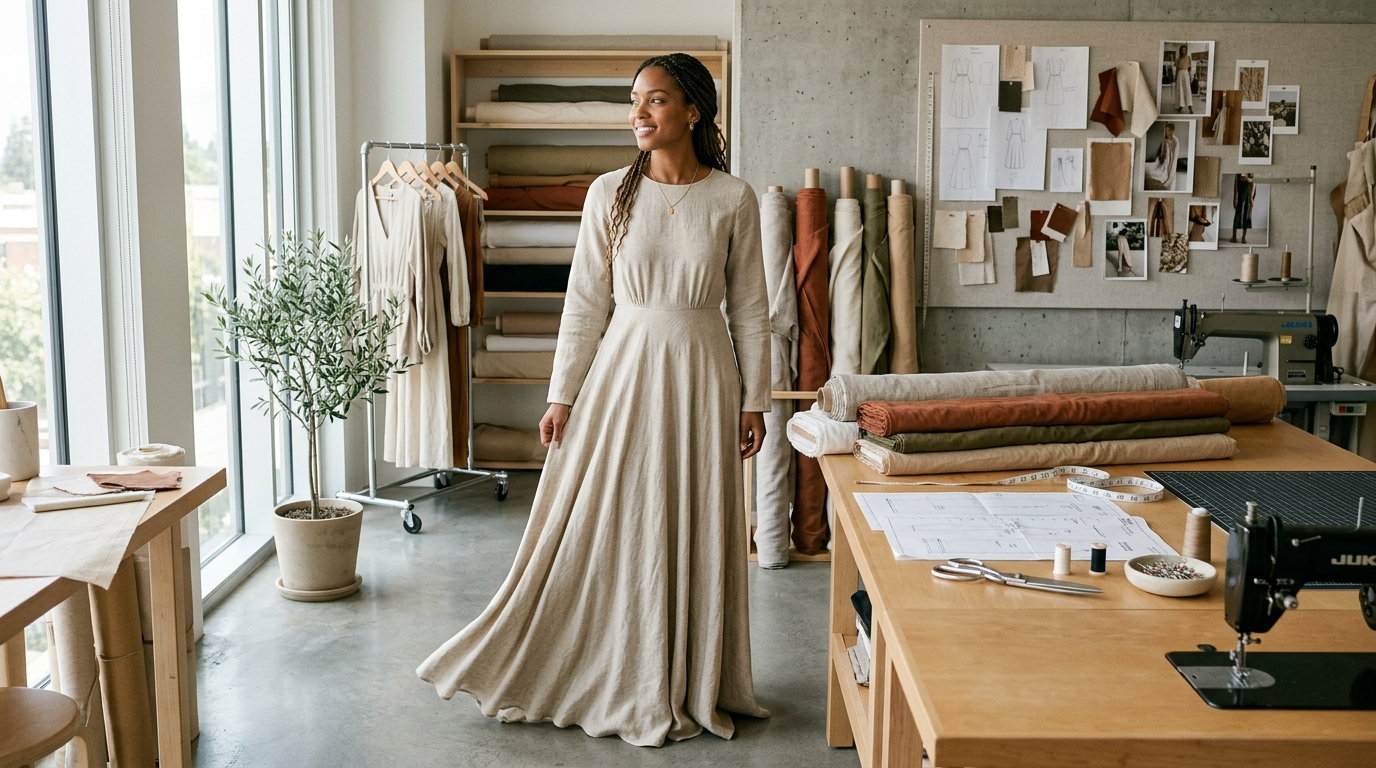
0 Comments