Learn how to sew a maxi dress with this beginner-friendly step-by-step guide. Discover fabric tips, sewing techniques, dress patterns, and DIY maxi dress ideas for 2026.
Flowy, elegant, comfortable — maxi dresses truly never go out of style! Whether you want a casual summer outfit, a boho-inspired look, or a chic handmade dress for special occasions, learning how to sew a maxi dress is one of the most rewarding sewing projects you can start today.
In fact, maxi dresses remain one of the most searched DIY fashion projects because they combine comfort with effortless style. And the best part? You don’t need advanced dressmaking experience to create one yourself. With the right sewing pattern, beginner-friendly fabric, and a few simple techniques, sewing a maxi dress can actually be easier than many people expect. This guide will walk you through everything you need to know about how to sew a maxi dress, from choosing fabrics and taking measurements to sewing seams, adding straps, and creating professional-looking finishes. Whether you're a beginner sewist or looking to improve your garment sewing skills, this article will help you confidently create your own beautiful handmade maxi dress in 2026.
What Is a Maxi Dress?
A maxi dress is a long flowing dress that typically extends down to the ankles or floor. In both fashion and sewing, the maxi dress is known for its elegant silhouette, comfortable fit, and versatile styling options. Whether you are learning how to sew a maxi dress for the first time or exploring modern fashion trends, understanding the basics of a maxi dress helps you choose the right style, fabric, and sewing pattern for your project.
Over the years, the maxi dress has become one of the most popular garments in women’s fashion because it combines comfort with effortless elegance. From casual summer outfits to formal evening wear, the maxi dress works beautifully for many occasions and body types. This versatility is exactly why so many sewing enthusiasts search for maxi dress sewing pattern ideas and beginner-friendly DIY maxi dress tutorials.
Definition of a Maxi Dress in Fashion and Sewing
In fashion, a maxi dress refers to a full-length dress designed to reach the ankles or floor. Unlike shorter dresses, the maxi dress creates a long and flowing appearance that feels relaxed yet stylish. The dress can be fitted, loose, layered, gathered, or draped depending on the overall design.
In sewing, a maxi dress sewing pattern is a garment template used to create these long dresses at home. Many beginner sewists choose a simple maxi dress pattern because the construction is often easier than heavily tailored garments. A beginner-friendly DIY maxi dress usually focuses on straightforward seams, comfortable fabrics, and forgiving silhouettes.
A maxi dress may include:
- Sleeveless bodices
- Adjustable straps
- Elastic waistlines
- Tiered skirts
- Wrap dress features
- Ruffled details
- Long flowing skirt panels
Because of its wearable design and easy customization options, the maxi dress remains one of the most searched topics for people learning how to sew a maxi dress at home.
Key Features of a Maxi Dress Silhouette
The silhouette of a maxi dress is one of its most recognizable features. Unlike short dresses or structured formalwear, a maxi dress focuses on movement, comfort, and elegant draping.
Full-Length Design
The defining characteristic of a maxi dress is its long length. Most styles extend to the ankles or touch the floor slightly, creating a graceful and elongated appearance.
Flowing Skirt Shape
Many maxi dress sewing patterns feature flowing skirts that move naturally while walking. This soft drape makes the dress feel comfortable and flattering for everyday wear.
Comfortable Fit
A DIY maxi dress is often designed with comfort in mind. Relaxed silhouettes, stretchy fabrics, and adjustable waistlines make maxi dresses suitable for many body types.
Versatile Necklines and Sleeves
A maxi dress can include many neckline and sleeve variations, including:
- V-neck maxi dresses
- Halter maxi dresses
- Sleeveless maxi dresses
- Long sleeve maxi dresses
- Off-shoulder styles
- Wrap maxi dress designs
These customizable features make how to sew a maxi dress an exciting and creative sewing project for beginners and experienced sewists alike.
Differences Between Maxi Dresses and Midi Dresses
Many people confuse a maxi dress with a midi dress, but the main difference is the overall length.
A maxi dress typically reaches:
- The ankles
- The tops of the feet
- Floor length in formal styles
A midi dress usually falls:
- Below the knees
- Mid-calf length
- Between the knee and ankle
Because of their longer silhouette, maxi dresses often create a more dramatic and elegant appearance compared to midi dresses. A maxi dress sewing pattern also generally requires more fabric due to the extended skirt length.
Another major difference involves styling. A maxi dress is commonly associated with:
- Boho fashion
- Summer vacation outfits
- Elegant evening looks
- Relaxed casual wear
- Resort and beach fashion
Meanwhile, midi dresses often create a more structured or modern everyday appearance.
For sewists learning how to sew a maxi dress, understanding dress length helps ensure proper fabric planning and hemming techniques during construction.
Popular Maxi Dress Styles for Home Sewing
One reason maxi dresses remain so popular is the wide variety of styles available for home sewing. A beginner-friendly maxi dress sewing pattern can easily be customized to match personal fashion preferences.
Wrap Maxi Dress
A wrap maxi dress combines the elegance of a long dress with the flattering shape of a wrap silhouette. This style is especially popular in DIY fashion sewing because of its adjustable fit.
Tiered Maxi Dress
Tiered dresses feature multiple gathered fabric layers that create volume and movement. These styles are common in bohemian and casual summer fashion.
Sleeveless Maxi Dress
A sleeveless maxi dress is ideal for warm weather and often easier for beginners learning how to sew a maxi dress.
Boho Maxi Dress
Bohemian-inspired maxi dresses often include:
- Loose silhouettes
- Soft flowing fabrics
- Floral prints
- Ruffles and gathers
- Relaxed styling details
Formal Maxi Dress
Elegant fabrics like satin, chiffon, or velvet can transform a simple DIY maxi dress into formal evening wear suitable for weddings and special occasions.
Because there are so many design possibilities, a maxi dress sewing pattern remains one of the most versatile garment sewing projects available today.
Why Maxi Dresses Remain Timeless Fashion Staples
Fashion trends constantly evolve, but the maxi dress continues to remain popular year after year. One major reason is versatility. A maxi dress can feel casual, elegant, relaxed, trendy, or sophisticated depending on the fabric, accessories, and styling choices.
Another reason the maxi dress remains timeless is comfort. Many people love wearing long flowing dresses because they offer freedom of movement while still looking polished and fashionable.
For sewists, learning how to sew a maxi dress is valuable because the garment works across multiple seasons and occasions. A single maxi dress sewing pattern can often be customized into many completely different looks simply by changing:
- Fabric type
- Sleeve design
- Dress length
- Waistline details
- Prints and colors
The timeless appeal of the maxi dress also comes from its flattering silhouette. Long vertical lines naturally elongate the body, creating a graceful appearance that suits many body shapes.
Common Occasions for Wearing Maxi Dresses
One of the best things about a maxi dress is how adaptable it is for different settings. A well-made DIY maxi dress can easily transition between casual and formal environments.
Common occasions for wearing a maxi dress include:
Casual Everyday Wear
Soft cotton or jersey maxi dresses are perfect for:
- Running errands
- Relaxing weekends
- Casual brunch outfits
- Everyday summer fashion
Beach Vacations and Resort Wear
Lightweight flowing maxi dresses are extremely popular for:
- Tropical vacations
- Beach holidays
- Cruise outfits
- Resort fashion styling
Weddings and Formal Events
Elegant fabrics and sophisticated silhouettes make formal maxi dresses ideal for:
- Wedding guest outfits
- Evening parties
- Garden celebrations
- Formal dinners
Seasonal Layering
Long sleeve maxi dresses can also work beautifully during cooler months when paired with:
- Denim jackets
- Cardigans
- Boots
- Layered accessories
Because of this incredible versatility, many beginners searching for how to sew a maxi dress quickly discover that a handmade maxi dress can become one of the most useful and stylish pieces in their wardrobe.
Why Sewing a Maxi Dress Is Perfect for Beginners
Learning how to sew a maxi dress is one of the best ways for beginners to start garment sewing with confidence. A maxi dress sewing pattern combines comfort, simplicity, and style, making it an ideal first project for new sewists. Unlike heavily structured clothing that requires advanced fitting and complicated tailoring, a DIY maxi dress is often designed with relaxed silhouettes and beginner-friendly sewing techniques.
Many people who are new to sewing choose a simple maxi dress pattern because it allows them to practice essential garment construction skills without feeling overwhelmed. At the same time, the finished result still looks stylish, modern, and wearable. That balance between easy sewing and fashionable results is exactly why so many beginners love learning how to sew a maxi dress.
Simple Garment Construction Compared to Fitted Dresses
One major reason a maxi dress sewing pattern is perfect for beginners is the simple garment construction. Compared to fitted dresses that require precise shaping, zippers, darts, and advanced tailoring methods, most DIY maxi dress projects use straightforward sewing steps that are much easier to manage.
Many beginner-friendly maxi dress sewing patterns include:
- Simple bodice construction
- Flowing skirt panels
- Minimal closures
- Elastic waistbands
- Adjustable straps
- Easy hemming techniques
This simplicity helps new sewists focus on learning core sewing skills instead of struggling with difficult garment engineering.
A fitted dress often requires:
- Exact body measurements
- Complicated fitting adjustments
- Structured interfacing
- Invisible zipper installation
- Precise seam shaping
By contrast, a maxi dress usually offers a more forgiving silhouette that allows beginners to enjoy the sewing process without constant frustration.
For anyone learning how to sew a maxi dress, this easier construction creates a much more enjoyable introduction to dressmaking.
Comfortable and Forgiving Fit for Many Body Types
Another reason beginners love sewing a maxi dress is the naturally comfortable and forgiving fit. Most maxi dresses are designed with relaxed shapes and flowing fabric, making them flattering for many body types and skill levels.
A DIY maxi dress often features:
- Loose skirt movement
- Soft draping fabric
- Adjustable waistlines
- Relaxed bodice designs
- Stretch-friendly silhouettes
These features make fitting much less stressful compared to highly tailored garments.
Because the fit is more forgiving, small sewing inaccuracies are often less noticeable. This gives beginner sewists more confidence while learning how to sew a maxi dress for the first time.
Many maxi dress sewing patterns also include flexible design options such as:
- Elastic waistbands
- Wrap dress styling
- Adjustable straps
- Gathered skirts
- Loose-fitting silhouettes
These adjustable details allow the garment to adapt comfortably to different body shapes while still looking stylish and elegant.
Minimal Tailoring Requirements for Beginner Sewists
Tailoring can feel intimidating for beginners, which is another reason a simple maxi dress pattern works so well as an introductory sewing project. Most maxi dress sewing patterns require far fewer advanced tailoring techniques than fitted dresses or formal garments.
A beginner-friendly DIY maxi dress often avoids:
- Complex darts
- Heavy interfacing
- Boning structures
- Detailed lining work
- Intricate shaping methods
Instead, the focus stays on simple garment assembly and wearable comfort.
This allows beginners learning how to sew a maxi dress to gradually build sewing confidence while still producing beautiful results. New sewists can concentrate on mastering foundational skills such as:
- Sewing straight seams
- Reading sewing patterns
- Cutting fabric correctly
- Hemming garments
- Attaching straps or waistbands
As sewing skills improve, beginners can later experiment with more advanced tailoring details in future projects.
Easy Straight Seams for Sewing Practice
Straight seams are one of the first techniques beginners learn when practicing garment sewing, and a maxi dress sewing pattern provides plenty of opportunities to build those skills.
Most DIY maxi dress projects involve:
- Long side seams
- Straight skirt seams
- Simple bodice assembly
- Basic waistband attachment
- Easy hem construction
Because many seams are long and relatively simple, beginners can focus on improving sewing machine control and stitch consistency.
Practicing straight seams while learning how to sew a maxi dress helps beginners become more comfortable with:
- Fabric handling
- Sewing machine speed control
- Seam allowances
- Pinning and clipping fabric
- Pressing seams correctly
Unlike smaller or highly detailed projects, a maxi dress gives beginners enough fabric space to work comfortably without feeling cramped or rushed.
The repetitive nature of sewing long seams also helps improve muscle memory and sewing accuracy over time.
Great Project for Learning Dressmaking Basics
A maxi dress sewing pattern is an excellent introduction to garment sewing because it teaches many essential dressmaking techniques in a manageable way. Beginners can practice important construction skills while creating a garment they can actually wear and enjoy.
By learning how to sew a maxi dress, beginners gain experience with:
- Reading sewing instructions
- Understanding pattern layouts
- Measuring and cutting fabric
- Sewing bodices and skirts together
- Adding elastic or straps
- Hemming long garments
- Pressing seams for professional finishes
These foundational skills are useful for nearly every future sewing project.
A DIY maxi dress also introduces beginners to working with different fabrics such as:
- Cotton
- Rayon
- Linen
- Jersey knit
- Chiffon
Understanding how fabric drape affects garment movement is an important part of learning dressmaking, and maxi dresses showcase this beautifully because of their long flowing silhouettes.
For many sewists, completing their first maxi dress sewing pattern becomes a major confidence milestone in their sewing journey.
Stylish DIY Fashion Project With Wearable Results
One of the biggest rewards of learning how to sew a maxi dress is ending up with a stylish handmade garment that feels fashionable and practical. Unlike some beginner sewing projects that are mainly for practice, a DIY maxi dress creates real wearable fashion that can become part of your everyday wardrobe.
Even simple maxi dress sewing patterns can look elegant and modern when paired with the right fabric and finishing details. Beginners can customize their dresses with:
- Floral prints
- Tiered skirts
- Ruffle accents
- Wrap silhouettes
- Sleeveless designs
- Long flowing sleeves
This creative flexibility makes sewing a maxi dress both fun and inspiring.
A handmade maxi dress can be worn for:
- Casual summer outfits
- Beach vacations
- Weekend brunches
- Garden parties
- Formal events
- Layered fall fashion
Because the finished garment looks polished and wearable, beginners often feel proud and motivated to continue sewing more clothing projects after completing their first DIY maxi dress.
The combination of simple construction, comfortable fit, and beautiful results is exactly why learning how to sew a maxi dress remains one of the best beginner garment sewing projects in 2026.
Essential Sewing Supplies for Sewing a Maxi Dress
Before learning how to sew a maxi dress, it’s important to prepare the right sewing tools and supplies. Having proper equipment can make the entire sewing process easier, faster, and far more enjoyable—especially for beginners working on their first maxi dress sewing pattern.
One reason many people enjoy creating a DIY maxi dress is that you do not need an expensive professional sewing studio to get started. With a few basic sewing essentials, beginner-friendly tools, and the right fabric supplies, you can successfully complete a beautiful handmade maxi dress at home.
Using the correct sewing tools also helps improve accuracy, fabric handling, seam quality, and garment finishing. Whether you are following a simple maxi dress pattern or experimenting with your own dress design, these sewing supplies will help you achieve cleaner and more professional-looking results.
Basic Sewing Tools Every Beginner Needs
Every beginner learning how to sew a maxi dress should start with a reliable collection of essential sewing tools. These tools make garment construction easier while helping beginners practice important dressmaking techniques correctly.
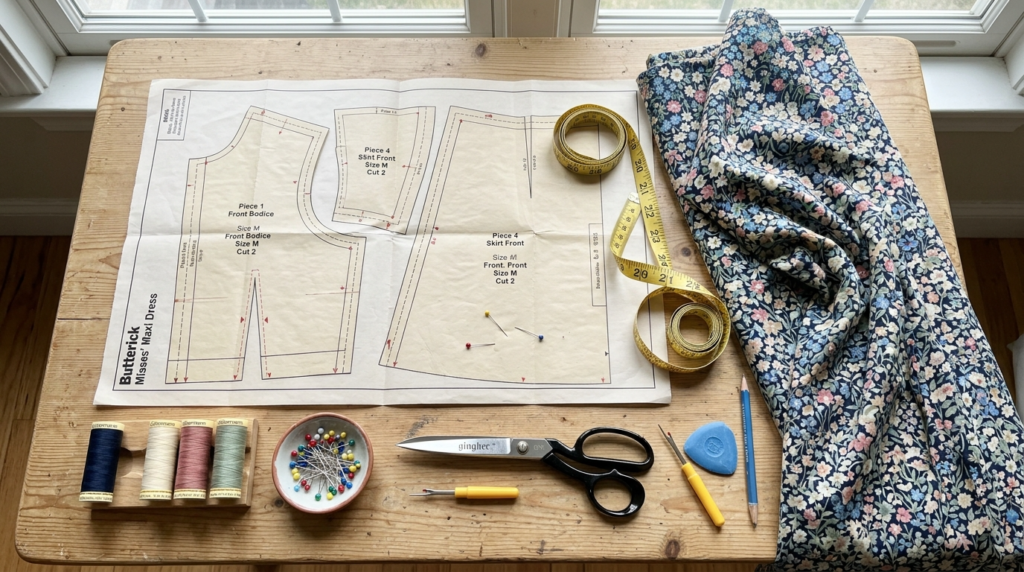
Basic sewing tools for a DIY maxi dress include:
- Sewing machine
- Fabric scissors
- Measuring tape
- Sewing pins or clips
- Hand sewing needles
- Fabric marking tools
- Seam ripper
- Iron and ironing board
- Thread and machine needles
A beginner-friendly maxi dress sewing pattern often requires straightforward sewing techniques, but using high-quality tools can still make a huge difference in the final garment appearance.
For example, sharp fabric scissors help create cleaner edges, while accurate measuring tools improve garment fit and symmetry. Even a simple seam ripper becomes extremely helpful when fixing small sewing mistakes during your DIY maxi dress project.
Choosing the Right Sewing Machine for Garment Sewing
A sewing machine is one of the most important investments when learning how to sew a maxi dress. Fortunately, beginners do not need an expensive industrial machine to create beautiful garments.
A basic beginner sewing machine should ideally include:
- Straight stitch settings
- Zigzag stitch options
- Adjustable stitch length
- Reverse stitching capability
- Easy threading system
- Reliable fabric feeding
These features are more than enough for most maxi dress sewing patterns.
When sewing lightweight fabrics commonly used for maxi dresses, smooth fabric feeding is especially important. Fabrics like rayon, cotton, linen, and jersey knit can shift easily if the sewing machine struggles with tension or feeding consistency.
Many beginner sewists prefer mechanical sewing machines because they are:
- Easier to learn
- More affordable
- Simple to maintain
- Reliable for garment sewing basics
However, computerized sewing machines can also be helpful for decorative stitching and adjustable sewing settings if you plan to continue learning advanced dressmaking.
Regardless of machine type, practicing basic stitches before starting your DIY maxi dress helps improve confidence and stitch quality.
Recommended Needles and Thread Types
Choosing the correct sewing machine needle and thread is extremely important when learning how to sew a maxi dress. Different fabrics require different needle types, and using the wrong combination can lead to skipped stitches, fabric damage, or uneven seams.
Universal Needles
Universal needles work well for many woven fabrics commonly used in beginner maxi dress sewing patterns, such as cotton and linen.
Ballpoint Needles
Ballpoint needles are ideal for knit fabrics because they slide between fabric fibers instead of piercing them aggressively. These needles work especially well for jersey knit DIY maxi dress projects.
Lightweight Fabric Needles
For delicate fabrics like chiffon or rayon, lightweight sharp needles help prevent snagging and puckering.
Polyester Thread
Polyester thread is one of the best all-purpose thread options for sewing a maxi dress because it offers:
- Strong durability
- Smooth stitching
- Flexibility for garment movement
- Compatibility with many fabrics
Thread color also matters. Matching thread closely to your fabric helps create cleaner and more professional-looking seams on your handmade maxi dress.
Measuring Tape, Pins, Clips, and Fabric Scissors
Accurate measuring and cutting are essential parts of learning how to sew a maxi dress successfully. Even beginner-friendly maxi dress sewing patterns rely on precise fabric preparation for proper garment construction.
Measuring Tape
A soft measuring tape is used for:
- Bust measurements
- Waist measurements
- Hip measurements
- Dress length adjustments
- Strap placement measurements
Proper measurements help your DIY maxi dress fit comfortably and drape correctly.
Sewing Pins and Clips
Pins and clips help secure fabric pieces before stitching. Fabric clips are especially useful for delicate fabrics that may become damaged by pinholes.
Using pins carefully helps:
- Align seams evenly
- Prevent shifting during sewing
- Improve garment accuracy
Fabric Scissors
Sharp fabric scissors are essential for cutting clean pattern pieces. Dull scissors can create jagged fabric edges that make sewing more difficult later.
Many experienced sewists recommend using dedicated fabric scissors only for sewing projects to keep the blades sharp for garment construction.
For beginners learning how to sew a maxi dress, accurate cutting can dramatically improve the final appearance of the dress.
Helpful Sewing Accessories for Beginners
In addition to basic sewing tools, several extra accessories can make sewing a DIY maxi dress easier and more enjoyable.
Helpful sewing accessories include:
- Rotary cutter and cutting mat
- Pattern weights
- Tailor’s chalk or fabric markers
- Seam gauge ruler
- Walking foot attachment
- Point turner tools
- Extra bobbins
These accessories help improve precision while reducing frustration during sewing projects.
Rotary Cutter and Mat
A rotary cutter allows smooth and accurate fabric cutting, especially when working with long skirt panels in a maxi dress sewing pattern.
Tailor’s Chalk
Fabric marking tools help transfer pattern markings onto fabric without damaging the material.
Walking Foot
A walking foot attachment helps feed slippery or stretchy fabrics evenly through the sewing machine. This is particularly helpful when sewing flowing fabrics often used for maxi dresses.
While these accessories are optional, they can significantly improve sewing accuracy and garment quality for beginners practicing how to sew a maxi dress.
Ironing and Pressing Tools for Professional Finishes
One of the most overlooked parts of garment sewing is pressing. However, proper ironing techniques can completely transform the final appearance of a handmade maxi dress.
Professional sewists often say:
“You’re not just sewing — you’re sewing and pressing.”
Ironing Board and Steam Iron
A good steam iron helps:
- Flatten seams
- Remove wrinkles
- Shape garment pieces
- Improve fabric drape
- Create crisp professional finishes
Pressing Seams During Construction
Pressing seams after each sewing step helps your DIY maxi dress look cleaner and more polished. It also makes later construction stages easier because fabric layers lie flat and align more accurately.
Hem Pressing
Long flowing hems are one of the defining features of a maxi dress, so careful pressing helps maintain smooth and even finishing lines.
Proper pressing is especially important for lightweight fabrics like rayon, chiffon, and linen commonly used in maxi dress sewing patterns.
Even a simple beginner DIY maxi dress can look professionally made when seams, hems, and garment edges are pressed carefully throughout the sewing process.
By gathering the right tools and learning how to use them correctly, beginners can make the process of learning how to sew a maxi dress much smoother, more enjoyable, and far more successful.
Step-by-Step Guide on How to Sew a Maxi Dress
Learning how to sew a maxi dress may seem intimidating at first, but the process becomes much easier when broken down into simple steps. One reason beginners love using a maxi dress sewing pattern is that the construction is often more forgiving than fitted garments. With the right fabric, proper preparation, and basic sewing techniques, creating a beautiful DIY maxi dress at home is absolutely achievable.
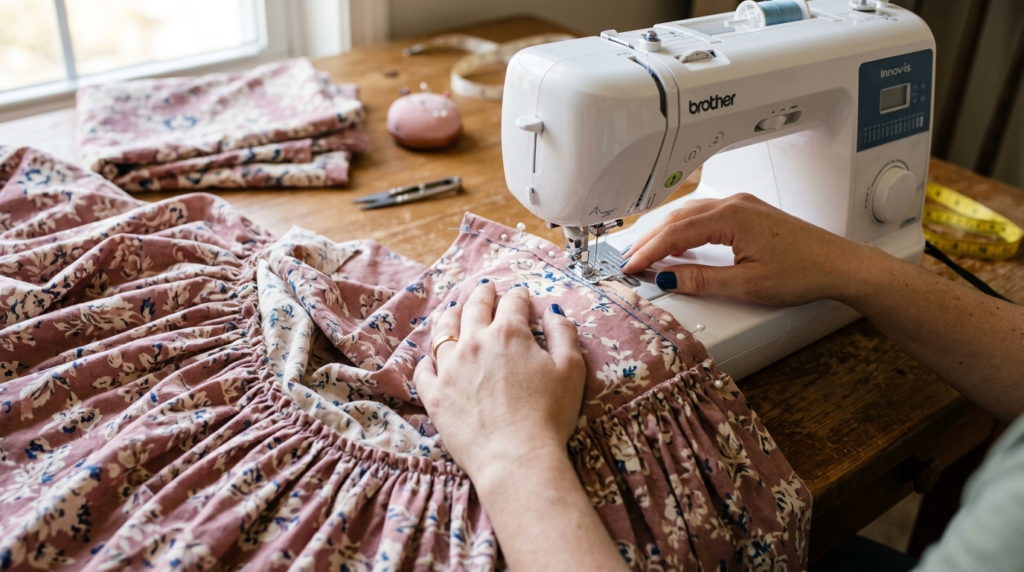
This step-by-step guide covers the essential stages of sewing a maxi dress, from preparing fabric to adding final finishing touches. Whether you are using a simple maxi dress pattern or customizing your own design, these steps will help you create a polished and wearable handmade garment.
Preparing and Prewashing Fabric
Before starting any DIY maxi dress, fabric preparation is extremely important. Many beginners skip this step, but prewashing fabric helps prevent shrinking, fabric distortion, and fitting problems later.
Natural fabrics commonly used for maxi dress sewing patterns, such as:
- Cotton
- Linen
- Rayon
- Viscose
often shrink slightly after washing. Prewashing ensures your finished maxi dress keeps its intended size and shape after future laundering.
Wash Fabric According to Fiber Type
Always follow the care instructions for your chosen fabric. Lightweight cottons and linens can usually be machine washed, while delicate fabrics like chiffon may require gentle care.
Dry and Press the Fabric
After washing, iron the fabric thoroughly before cutting. Wrinkled fabric can lead to inaccurate pattern placement and uneven cutting lines.
Proper preparation helps your DIY maxi dress look cleaner and fit more accurately once assembled.
Cutting Fabric Using Sewing Pattern Layouts
Accurate cutting is one of the most important steps when learning how to sew a maxi dress. Even beginner-friendly maxi dress sewing patterns rely on careful fabric alignment and clean cutting techniques.
Follow Pattern Layout Instructions
Most sewing patterns include layout diagrams that show how to place pattern pieces efficiently on the fabric. Pay close attention to:
- Grainline arrows
- Fold lines
- Stretch direction
- Fabric print placement
Correct fabric positioning helps the maxi dress drape properly and maintain its intended silhouette.
Use Sharp Cutting Tools
Sharp fabric scissors or a rotary cutter create cleaner edges and improve sewing accuracy. Jagged or uneven cuts can make garment assembly more difficult later.
Cut Slowly and Carefully
Long skirt panels used in many maxi dress sewing patterns require extra attention during cutting. Taking your time helps maintain symmetry and smooth garment construction.
For beginners learning how to sew a maxi dress, precise cutting often makes the entire sewing process much easier.
Marking Pattern Pieces Correctly
Pattern markings help guide garment assembly and ensure all pieces align properly. Transferring these markings accurately is especially important for a flowing garment like a maxi dress.
Common sewing pattern markings include:
- Notches
- Fold indicators
- Waist placement marks
- Strap positions
- Hem guides
- Seam allowance references
Use Fabric-Safe Marking Tools
Tailor’s chalk, washable fabric pens, or fabric markers work well for transferring markings onto fabric without causing permanent damage.
Marking helps maintain accuracy while sewing your DIY maxi dress, especially when attaching bodices, skirts, straps, or waistbands.
Many beginners underestimate this step, but proper marking prevents confusion during later sewing stages and improves overall garment symmetry.
Sewing the Bodice Pieces Together
The bodice forms the upper section of the maxi dress, and assembling it properly helps create structure and fit.
Start With Shoulder Seams
Most maxi dress sewing patterns begin by joining front and back bodice pieces at the shoulders.
Sew Side Seams
After the shoulder seams are complete, sew the bodice side seams carefully while maintaining consistent seam allowances.
Press Seams Flat
Pressing seams after sewing is essential for professional-looking garment construction. Flat seams help the bodice sit more smoothly against the body.
Depending on your DIY maxi dress design, the bodice may include:
- Darts
- Elastic casings
- Wrap closures
- Gathered details
- Neckline facings
Beginner-friendly simple maxi dress patterns usually simplify bodice construction to make sewing easier for new sewists.
Attaching the Skirt Panels
One of the most exciting stages of learning how to sew a maxi dress is attaching the flowing skirt panels. At this point, the garment finally begins looking like a finished dress.
Assemble the Skirt First
Many maxi dress sewing patterns require sewing skirt panels together before attaching them to the bodice.
Depending on the design, your DIY maxi dress may feature:
- Straight skirts
- Gathered skirts
- Tiered skirts
- Circle skirts
- Wrap skirt panels
Match Waist Seams Carefully
Pin the skirt evenly to the bodice while matching side seams and center points carefully.
Sew Slowly Around Curves and Gathers
If your maxi dress includes gathers or lightweight fabric, sewing slowly helps maintain smooth seam alignment and balanced draping.
Attaching the skirt is often the moment when beginners feel most motivated because the full silhouette of the maxi dress becomes visible.
Adding Straps, Sleeves, or Waistbands
Customization is one of the best parts of sewing a DIY maxi dress. Many maxi dress sewing patterns allow beginners to choose between different sleeve styles, strap designs, and waistline options.
Straps
Simple shoulder straps are beginner-friendly and quick to sew. Adjustable straps can also improve garment comfort and fit.
Sleeves
Sleeves may range from:
- Sleeveless styles
- Cap sleeves
- Flutter sleeves
- Long fitted sleeves
Beginner sewists often start with sleeveless maxi dresses because they require fewer advanced sewing techniques.
Waistbands and Elastic Casings
Waistbands help define the silhouette while improving comfort. Elastic waistlines are especially beginner-friendly because they simplify fitting adjustments.
These customizable details allow your DIY maxi dress to reflect your personal style while still remaining approachable for beginner sewing.
Sewing Side Seams and Finishing Edges
Side seams connect the garment together and help shape the final silhouette of the maxi dress.
Align Fabric Carefully
Pin side seams evenly before stitching to prevent twisting or uneven fabric drape.
Finish Raw Edges
Finishing raw edges helps prevent fabric fraying and improves garment durability. Beginners can use:
- Zigzag stitches
- Pinking shears
- Overlock stitches
- French seams for lightweight fabrics
Even simple seam finishes help your handmade maxi dress look more polished and professionally constructed.
Press Seams Again
Pressing after each seam improves garment structure and overall appearance significantly.
Hemming a Long Maxi Dress Properly
Hemming is one of the most important finishing steps when learning how to sew a maxi dress because the long hemline is highly visible.
Let the Dress Hang First
Before hemming, allow the maxi dress to hang for several hours or overnight. Lightweight fabrics may stretch slightly due to gravity.
Measure Hem Length Carefully
Ensure the hem is even all around before sewing. Uneven hems are one of the most common beginner sewing mistakes.
Double Fold Hem Technique
Many beginners use a double fold hem because it creates:
- Clean edges
- Strong durability
- Professional-looking finishes
Long flowing hems are one of the defining features of a maxi dress, so taking time here greatly improves the final result.
Final Pressing and Finishing Touches
The final stage of sewing a DIY maxi dress involves pressing the garment and checking all finishing details carefully.
Final Pressing
Use a steam iron to:
- Smooth seams
- Flatten hems
- Shape the garment properly
- Improve fabric drape
A well-pressed maxi dress instantly looks more elegant and professionally made.
Check Construction Details
Before finishing your project, inspect:
- Loose threads
- Uneven seams
- Strap security
- Hem consistency
- Fit adjustments
Making small corrections now helps your handmade maxi dress look polished and wearable.
Completing a maxi dress sewing pattern is a major accomplishment for beginner sewists. Not only do you gain practical garment sewing experience, but you also create a stylish custom garment you can proudly wear for many different occasions.
Easy Maxi Dress Variations You Can Try
One of the best things about learning how to sew a maxi dress is the endless variety of styles you can create. A single maxi dress sewing pattern can be customized in many different ways simply by changing the fabric, silhouette, sleeves, or decorative details. This flexibility is exactly why so many beginners enjoy exploring different DIY maxi dress ideas after completing their first project.
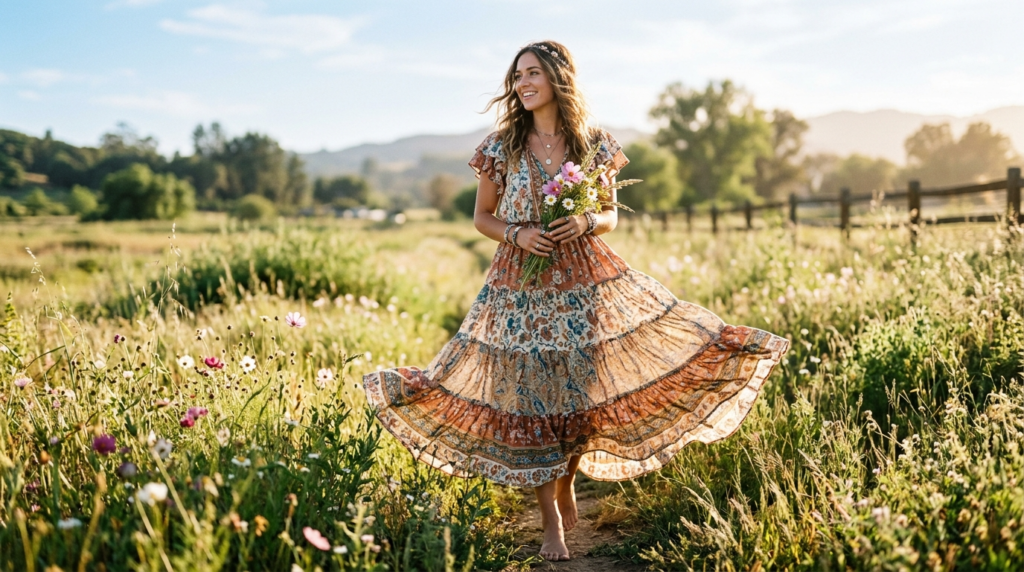
Whether you prefer relaxed bohemian fashion, elegant evening wear, or comfortable casual outfits, there is a maxi dress style for every occasion. As you continue learning how to sew a maxi dress, experimenting with different variations also helps improve your garment sewing skills and creativity.
From flowing boho silhouettes to stylish wrap designs, these easy maxi dress variations are perfect for beginners and experienced sewists alike.
Boho Maxi Dress Sewing Ideas
A bohemian-inspired maxi dress remains one of the most popular styles in modern DIY fashion sewing. The relaxed fit, flowing fabrics, and effortless styling make boho designs especially beginner-friendly for anyone learning how to sew a maxi dress.
A boho DIY maxi dress often includes:
- Loose flowing silhouettes
- Soft gathered skirts
- Lightweight fabrics
- Floral prints
- Bell sleeves
- Lace or crochet accents
- Tiered skirt details
Many beginner-friendly maxi dress sewing patterns use simple construction techniques that work perfectly for boho fashion. Fabrics like rayon, cotton voile, and linen help create the soft drape commonly associated with bohemian clothing.
A boho maxi dress is ideal for:
- Summer outfits
- Music festivals
- Beach vacations
- Casual weekend fashion
- Relaxed everyday wear
For beginners practicing how to sew a maxi dress, boho styles are especially forgiving because relaxed silhouettes do not require highly precise tailoring.
Tiered Maxi Dress Styles
Tiered designs are another extremely popular variation when learning how to sew a maxi dress. A tiered maxi dress features multiple gathered fabric layers sewn together to create movement, volume, and texture.
Tiered DIY maxi dress styles often include:
- Soft gathered sections
- Flowy layered skirts
- Relaxed oversized silhouettes
- Comfortable waistlines
- Feminine movement and drape
Many sewists love tiered maxi dress sewing patterns because they look stylish while remaining relatively easy to construct.
A tiered maxi dress works beautifully with:
- Cotton fabrics
- Rayon blends
- Lightweight linen
- Soft floral prints
Because the gathered layers create natural fullness, this style also helps hide small sewing imperfections, making it an excellent choice for beginners learning how to sew a maxi dress.
Tiered silhouettes continue trending in modern fashion because they combine comfort with elegant movement and casual sophistication.
Wrap Maxi Dress Sewing Patterns
A wrap maxi dress combines the elegance of a long flowing dress with the flattering shape of a wrap silhouette. Many sewists consider this one of the most versatile options when learning how to sew a maxi dress.
A wrap-style DIY maxi dress typically features:
- Adjustable waist ties
- Flattering V-necklines
- Flowing skirt panels
- Comfortable adjustable fit
- Feminine draped silhouettes
One reason wrap maxi dress sewing patterns remain popular is their flexibility. The adjustable waist ties make fitting easier for beginners while still creating a polished appearance.
Wrap maxi dresses can easily transition between:
- Casual daytime outfits
- Vacation wear
- Elegant evening fashion
- Wedding guest attire
For beginners practicing how to sew a maxi dress, wrap designs provide a forgiving fit while teaching important garment construction skills like attaching ties, shaping bodices, and sewing flowing skirt panels.
Sleeveless Summer Maxi Dresses
A sleeveless maxi dress is one of the easiest and most beginner-friendly variations to sew. Many people starting their first easy maxi dress sewing pattern choose sleeveless styles because they avoid the extra complexity of sleeve construction.
Sleeveless DIY maxi dress designs are especially popular for:
- Summer fashion
- Beach vacations
- Tropical climates
- Casual warm-weather outfits
Common sleeveless maxi dress features include:
- Thin shoulder straps
- Halter necklines
- Tank-style bodices
- Relaxed flowing skirts
- Lightweight breathable fabrics
Learning how to sew a maxi dress using a sleeveless design allows beginners to focus on foundational garment sewing skills such as:
- Straight seams
- Bodice assembly
- Skirt attachment
- Hemming techniques
- Basic fitting adjustments
Cotton, rayon, and linen fabrics work especially well for sleeveless maxi dresses because they create soft movement while remaining breathable and comfortable.
Long Sleeve Maxi Dresses for Cooler Seasons
While many people associate maxi dresses with summer fashion, long sleeve styles are perfect for cooler seasons as well. A long sleeve maxi dress combines elegance with practicality and works beautifully for fall, winter, and transitional weather.
Long sleeve DIY maxi dress styles may include:
- Fitted sleeves
- Puff sleeves
- Balloon sleeves
- Bishop sleeves
- Elastic sleeve cuffs
Many long sleeve maxi dress sewing patterns also pair beautifully with:
- Boots
- Jackets
- Cardigans
- Layered accessories
For beginners learning how to sew a maxi dress, sleeves may initially seem intimidating, but simple sleeve designs can still be very approachable with practice.
Long sleeve maxi dresses often use fabrics such as:
- Jersey knit
- Soft rayon
- Velvet
- Lightweight sweater knits
These fabrics help create cozy yet stylish handmade garments suitable for multiple seasons.
Ruffle Maxi Dress Designs
Ruffles add movement, texture, and feminine detail to a DIY maxi dress. Many modern maxi dress sewing patterns incorporate ruffles to create soft romantic silhouettes that remain trendy year after year.
Ruffle details may appear on:
- Sleeves
- Hemlines
- Necklines
- Tiered skirts
- Shoulder straps
A ruffle maxi dress can range from subtle and elegant to bold and dramatic depending on the design.
For sewists learning how to sew a maxi dress, adding ruffles is also a great way to practice:
- Gathering techniques
- Fabric control
- Decorative garment finishing
- Layered construction methods
Despite looking stylish and detailed, many ruffle designs are surprisingly beginner-friendly when added gradually to a simple maxi dress sewing pattern.
Casual Everyday Maxi Dress Ideas
One reason people love learning how to sew a maxi dress is because casual maxi dresses are incredibly practical for everyday wear. A comfortable handmade DIY maxi dress can easily become a wardrobe staple.
Casual maxi dress styles often feature:
- Relaxed silhouettes
- Soft knit fabrics
- Elastic waistlines
- Simple sleeveless cuts
- Comfortable side pockets
These easygoing designs work well for:
- Running errands
- Weekend outfits
- Lounging comfortably
- Casual travel fashion
- Everyday summer wear
Simple everyday maxi dress sewing patterns are especially useful for beginners because they prioritize comfort and straightforward construction over advanced tailoring.
Learning how to sew a maxi dress through casual styles helps beginners build confidence while creating garments they can wear regularly.
Formal Maxi Dress Sewing Inspiration
A maxi dress can also become an elegant formal garment with the right fabric and design details. Formal DIY maxi dress projects allow sewists to create sophisticated custom clothing for weddings, evening events, and special occasions.
Formal maxi dress sewing patterns often include:
- Satin or chiffon fabrics
- Draped silhouettes
- Elegant necklines
- Long flowing skirts
- Open-back details
- Structured bodices
Although formal designs may involve slightly more advanced sewing techniques, many simple elegant styles are still accessible for confident beginners learning how to sew a maxi dress.
Creating a formal handmade maxi dress offers several advantages:
- Custom sizing and fit
- Personalized fabric choices
- Unique one-of-a-kind fashion
- More affordable alternatives to designer dresses
As sewing skills improve, experimenting with formal maxi dress designs becomes an exciting way to expand creativity and garment construction experience.
With so many beautiful variations available, it’s easy to see why learning how to sew a maxi dress remains one of the most rewarding and versatile sewing projects for beginners and experienced sewists alike.
Tips to Make Your Handmade Maxi Dress Look Professional
Learning how to sew a maxi dress is exciting, but making your finished garment look polished and professionally made requires attention to detail. Even a beginner-friendly maxi dress sewing pattern can look elegant and high-end when proper sewing techniques are used throughout the process.
Many experienced sewists agree that the difference between an average garment and a professional-looking DIY maxi dress often comes down to finishing details. Clean seams, careful pressing, smooth hems, and quality fabrics all play an important role in the final appearance of a handmade maxi dress.
If you want your handmade garment to look more refined and store-bought, these professional sewing tips will help elevate your maxi dress project while improving your overall garment sewing skills.
Pressing Seams Throughout the Sewing Process
One of the most important steps in learning how to sew a maxi dress professionally is pressing seams regularly during construction. Many beginners underestimate how much pressing affects the final garment appearance, but proper ironing can completely transform a DIY maxi dress.
Professional sewists often press seams:
- After every stitching step
- Before attaching garment sections
- While shaping curves and hems
- During final garment finishing
Pressing helps:
- Flatten bulky seams
- Improve garment structure
- Create crisp clean lines
- Enhance fabric drape
- Make sewing easier in later steps
A flowing maxi dress relies heavily on smooth fabric movement, so wrinkled or bulky seams can negatively affect the silhouette.
When learning how to sew a maxi dress, always keep a steam iron nearby and press carefully throughout the sewing process instead of waiting until the end.
Using Matching Thread Colors
Thread may seem like a small detail, but choosing the correct thread color can dramatically improve the appearance of a handmade maxi dress.
Matching thread helps:
- Hide stitching lines
- Create cleaner seams
- Improve garment professionalism
- Blend decorative topstitching naturally
For beginners learning how to sew a maxi dress, polyester thread is usually the best option because it offers:
- Strong durability
- Smooth machine stitching
- Flexibility for garment movement
- Compatibility with most fabrics
When selecting thread for a DIY maxi dress, try matching the thread to the dominant fabric color rather than smaller print details.
Contrasting thread can work beautifully for decorative sewing, but beginners often achieve more polished results with subtle color matching.
Even a simple maxi dress sewing pattern instantly looks cleaner and more professional when thread colors blend smoothly with the fabric.
Clean Hemming Techniques for Long Dresses
The hemline is one of the most visible parts of a maxi dress, making clean hemming essential when learning how to sew a maxi dress professionally.
Uneven or bulky hems can make a beautiful DIY maxi dress look unfinished, especially because long dresses naturally draw attention to fabric movement near the floor.
Double Fold Hem
A double fold hem is one of the most beginner-friendly hemming techniques for a maxi dress sewing pattern. It creates:
- Clean fabric edges
- Strong durability
- Professional-looking finishes
Narrow Hem for Lightweight Fabrics
Delicate fabrics like chiffon or rayon often benefit from narrow rolled hems that maintain soft flowing movement.
Let the Dress Hang Before Hemming
One professional tip for sewing a maxi dress is allowing the garment to hang overnight before hemming. Long skirts may stretch slightly due to gravity, especially when using lightweight fabrics.
Taking time to create a smooth and even hem can dramatically improve the overall quality of your handmade maxi dress.
Adding Lining for Better Structure
Adding lining is another excellent way to elevate a DIY maxi dress and create a more polished finish. While not every maxi dress sewing pattern requires lining, it can improve both appearance and comfort significantly.
Lining helps:
- Prevent transparency
- Improve garment structure
- Enhance fabric drape
- Increase comfort against the skin
- Reduce wrinkling
- Create smoother movement
Formal maxi dresses especially benefit from lining because it adds elegance and stability to lightweight fabrics.
When learning how to sew a maxi dress, beginners often start with unlined garments first. However, experimenting with simple lining techniques later can greatly improve garment quality and sewing skills.
Soft lightweight lining fabrics such as rayon lining or polyester lining work well for many DIY maxi dress projects.
Improving Garment Drape and Movement
One of the defining characteristics of a beautiful maxi dress is graceful movement. The way the fabric flows while walking affects the elegance and comfort of the garment.
Choosing the right fabric is extremely important when learning how to sew a maxi dress with professional-looking drape.
Fabrics known for excellent movement include:
- Rayon
- Viscose
- Jersey knit
- Chiffon
- Lightweight cotton blends
Heavy or stiff fabrics may create bulky silhouettes that reduce the soft flowing appearance associated with a classic maxi dress.
Avoid Excess Bulk
Reducing unnecessary seam bulk helps fabric move more naturally. Trimming seam allowances and pressing carefully improves overall drape.
Use Lightweight Interfacing Sparingly
Too much interfacing can stiffen the garment unnecessarily, especially around necklines and waistbands.
A flowing silhouette is one reason so many people love wearing DIY maxi dresses, so improving garment movement greatly enhances the final result.
Topstitching and Finishing Details
Small finishing details can make a huge difference in how professional a handmade maxi dress looks. Topstitching adds durability while also giving the garment a cleaner and more polished appearance.
Topstitching may be used on:
- Necklines
- Waistbands
- Straps
- Seam edges
- Hemlines
When learning how to sew a maxi dress, practicing neat and even topstitching helps improve sewing machine control and garment precision.
Other professional finishing techniques include:
- Understitching facings
- Finishing raw edges cleanly
- Removing loose threads
- Matching seam intersections carefully
- Reinforcing stress points
Even a beginner maxi dress sewing pattern can appear much more refined when finishing details are handled carefully.
These subtle techniques often separate homemade-looking garments from professionally constructed DIY maxi dresses.
Choosing High-Quality Fabrics and Notions
Fabric quality plays a major role in the final appearance of any maxi dress. Even with excellent sewing skills, low-quality materials can affect drape, comfort, and garment durability.
When learning how to sew a maxi dress, investing in better fabrics often produces noticeably better results.
High-quality fabrics usually provide:
- Better drape and movement
- Improved comfort
- Cleaner sewing performance
- Longer-lasting garments
- More elegant appearance
Important notions for a professional DIY maxi dress may include:
- Quality thread
- Durable elastic
- Soft lining fabrics
- Strong closures
- Reliable interfacing
Choosing appropriate materials helps your maxi dress sewing pattern look more polished while also making the sewing process easier.
For beginners, medium-weight cotton, rayon blends, and stable knits are excellent choices because they balance comfort, movement, and ease of sewing.
As your sewing skills improve, experimenting with luxury fabrics can help you create even more elegant and sophisticated handmade maxi dresses.
By focusing on pressing, clean finishes, proper fabric choices, and careful construction, anyone learning how to sew a maxi dress can create beautiful handmade garments that look stylish, polished, and professionally made.
Learning how to sew a maxi dress is one of the best ways to improve your garment sewing skills while creating stylish, wearable fashion pieces. Maxi dresses are comfortable, versatile, and surprisingly beginner-friendly, making them perfect for sewists who want to build confidence with DIY clothing projects.
By choosing the right fabric, following a beginner sewing pattern, and practicing simple dressmaking techniques, you can create beautiful handmade maxi dresses for every season and occasion. Start with a simple design, experiment with colors and fabrics, and enjoy the creative process of sewing your own custom wardrobe.
Save this guide for your next sewing project and start creating your dream handmade maxi dress today!
0 Comments